
Traffic beats crime as top threat to CT business
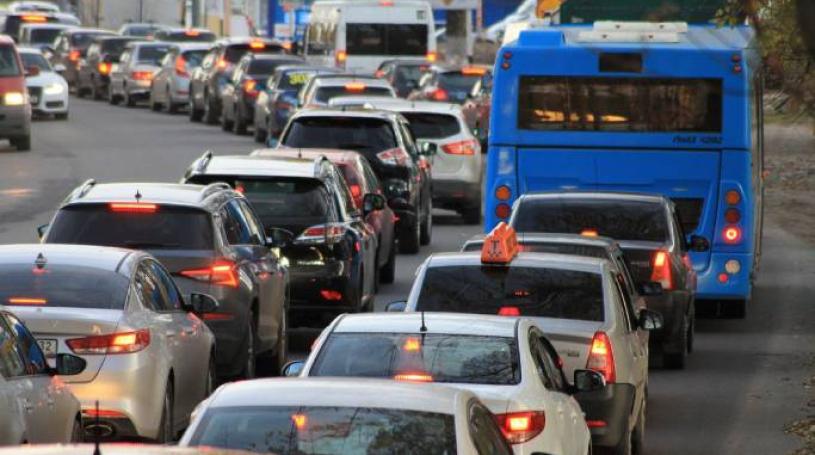
Traffic congestion is more damaging to Cape Town business activity than crime or electricity supply constraints at a local level, according to the Cape Chamber of Commerce and Industry’s Business Environment Survey.
The survey—conducted by the Bureau for Economic Research and analysed by Impact Economix—asked businesses to rank 61 constraints across firm, precinct, sector, and provincial levels. While national issues dominated overall rankings, traffic congestion emerged as the single largest precinct-level impediment to local growth.
The problem is most acute within the City of Cape Town metro, where 54.8% of 230 respondents identified traffic as a serious constraint, compared to 24.1% in non-metro areas. Pressure scales sharply with company size: 72.7% of large businesses (200+ employees) rated congestion as a critical issue.
Across all 294 Western Cape respondents, precinct traffic ranked at 49.0%, edging out electricity supply, digital connectivity, and crime. Key congestion corridors cited include the N2 at the Helderberg, the R27 harbour access route, and arterial roads serving Killarney Gardens.
In his analysis of survey data, Impact Economix economist Rae Wolpe says traffic congestion stands out as the one constraint largely determined by geographic location. "Where a business is located almost never explains what it complains about," Wolpe said. "Across the sixty-one constraints we tested, location divides respondents on only fourteen, while firm size divides them on fifty-five. Congestion is the great exception: a thirty-one point gap between businesses inside the metro and those outside it is the sharpest geographic result anywhere in this survey."
"When a difference that large turns up in a dataset where geography is usually the weakest cut, it is telling you something structural about how the city works, not a difference in how people feel about traffic."
The data also points to the movement of goods as having the biggest and most negative business impact, Wolpe said."Congestion in Cape Town is worst where goods move rather than where people shop. Businesses in industrial precincts and business parks rate it a serious constraint at 62.6 per cent, against 50.0 per cent in the commercial central business districts, and inside the metro the gap between industrial and commercial areas on congestion is more than eighteen percentage points."
"That pattern holds across the precinct questions generally: industrial areas rate fourteen of the fifteen precinct items worse than the CBDs do. This is an industrial cost that requires urgent attention to enhance manufacturing competitiveness."
The survey results also point to an overlap between concerns around congestion and public transport, with public transport prompting a similar survey split between metro and non-metro respondents. The implication is that insufficient public transport adds pressure to road traffic congestion, thereby impacting on the movement of goods, Wolpe says: "When rail carries fewer people, staff and freight end up competing for the same road space."