
Stock crunch drives Cape Town luxury prices up as broader market cools
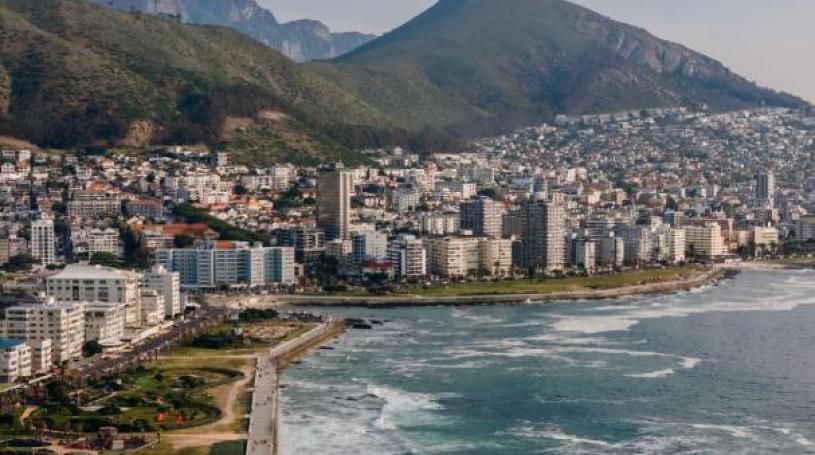
A supply shortage of upmarket residential properties in Cape Town is driving prices sky-high, with prominent estate agents this week declaring top-tier demand at an all-time high.
The stock crunch has driven a sharp drop in property transfers year-on-year. Deeds Office and Propstats figures for Cape Town’s Atlantic Seaboard show recorded sales fell by roughly 34% in the first half of 2026, dropping from 389 transactions in H1 2025 to 256 in H1 2026. Broader metro listing volumes also contracted by roughly 22% entering 2026 as sustained semigration and local demand absorbed available inventory faster than new stock came to market.
"The reality is that the volume of sales might be down, and the only basis for that is because the volume of listings is down dramatically," prominent Atlantic Seaboard realtor Lance Cohen said this week. "There are a lot more buyers and properties are selling much faster. We've never been in a position where there is so much demand."
By way of example, he cited a heritage home in Fresnaye that drew 40 enquiries within hours of listing and sold within 24 hours for R22 million, with 12 viewing appointments still pending. A four-bedroom townhouse in Fresnaye also sold for R40 million, Cohen said, estimating that around 75% of buyers at the top end of his market are foreigners.
The meagre listings are due to an ongoing land shortage, with most available land on the peninsula already developed and only a limited number of redevelopments coming on stream. Cohen believes geopolitical tensions and economic headwinds in Europe are further fuelling international demand.
Another prominent realtor, Denise Dogon from Double D Property Consultants, also reports strong demand from Gauteng buyers. She predicts further semigration pressure if Gauteng metros end up with unstable coalitions unable to resolve service delivery failures.
She sees property development spreading outwards towards outlying suburbs and towns, and up the West Coast, "because people can't afford to live in the city centre anymore."
"At the moment, demand is huge. If you want something on the Atlantic Seaboard up to R15m, you have a very big shortage of stock."
However, Hassen Kajee from Cape Town-based MiProperty Group believes that bullish sentiment is not reflected across the broader Cape Town market, which he describes as relatively cool compared with last year. He links the slowdown to global geopolitical uncertainty and economic headwinds, while also citing concerns around xenophobia as a possible drag on sentiment—particularly for Nigerian buyers, the top-performing nationality within the broader sub-Saharan African buyer segment.
Kajee believes property owners are also more reluctant to sell during uncertain times, with Cape Town viewed as an investment safe haven: "With war and uncertainty, people are holding on to the one thing that makes sense, which is property."