
Stakeholders warn: Rail Master Plan needs execution, not just intent
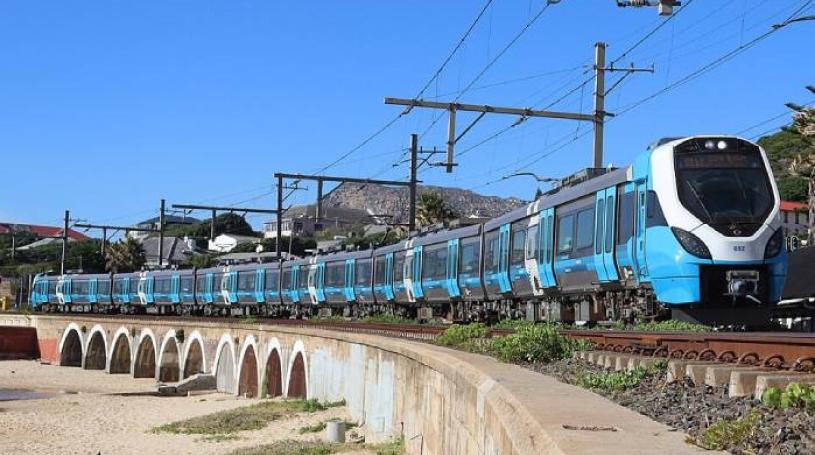
Industry stakeholders say speedy execution of the National Rail Master Plan is urgently required to remedy South Africa’s gloomy commuter rail service.
The Draft version of the Plan has generated cautious optimism since it was released late last month by Transport Minister Barbara Creecy. While the Plan reaffirms Government’s commitment to devolve the commuter rail mandate to municipalities, the document offers neither timelines nor clarity around funding mechanisms.
The City of Cape Town has for years agitated for devolution of commuter rail, which is still in a recovery phase following a system collapse during Covid-19 when much of the rail infrastructure was damaged or stolen. The diminished service is a further blow for commuters already saddled with hefty transport costs, with the current Middle East crisis likely to add further pressure.
“Intent and action do not often sit in the same space,” says Peter Haylett, chairperson of the Cape Chamber Infrastructure Business Environment Portfolio Committee. Haylett fears the same implementation delays seen with regard to unbundling Eskom into separate divisions, a structural reform also seen as fundamental to future economic growth. “With rail devolution, and the current euphoria surrounding it, there is a strong likelihood that this pattern will emerge. I certainly hope I am wrong,” Haylett says. “In both cases (Electricity and Transport), lack of government finance is at the root, not a willingness to open the market. This gives rise to an attempt to keep the plum opportunities.”
“To date, PRASA, certainly in the Western Cape has shown initiative, but is constrained by budget for signaling equipment, which is key to creating frequency.”
Haylett believes addressing congestion requires a holistic approach, with private sector assistance.
Andrew Donaldson, Vice-Chairperson of the Cape Chamber Public Institutions Business Portfolio Committee, says the Draft Plan’s in-principle devolution of Metrorail to the City could lead to further transport investment: “It is an opportunity to boost investment in public transport further, and improve integration across transport modes and revitalise transport hubs as commercial nodes.”
Stephan Krygsman, a transport economics expert and Professor in the Department of Logistics at Stellenbosch University, also welcomes the Master Plan, but believes the City would need to insist on various conditions to make the Plan workable. These include:
-- An annual rail subsidy or equitable share of the PRASA budget allocation
-- Control over all land transport competition and regulation of all transport modes in the functional region of the City (you cannot have independent buses or taxis or BRT also competing for the market)
-- The authority to determine the labour resources required.
-- A larger allocation from the fuel levy (Metros get a certain percentage of the fuel levy)
-- Control of the track, the stations, the rolling stock and the signalling.
“Once you have sorted out these aspects, you will undertake a well-structured, verifiable Economic Evaluation (extended Benefit-Cost study) for rail, including sensitivity tests, and have it audited by an independent group. Once that is complete, it's all systems go,” Krygsman says. “Personally, I would allow various companies to tender to operate the rail.”
Analyst Terry Hutson, a regular commentator on rail and port-related developments, says Creecy’s Draft Plan should be “judged not by its intent, but by its execution.”
“South Africa has produced no shortage of strategies, roadmaps and turnaround plans over the years. What has been lacking is consistent implementation, accountability, and the political will to prioritise competence over expediency,” Hutson says.
“If this latest initiative is to succeed, it will require more than infrastructure investment. It will demand structural reform, transparent partnerships with the private sector, and above all, the appointment of skilled, experienced professionals at every level of the system. Without that, the risk is that the plan becomes another well-intentioned document — filed alongside its predecessors — while the real economy continues to bear the cost of a railway system that falls short of its potential.”