
South Africa’s First Autonomous Vessel Hits the Global Stage Following Successful Sea Trials
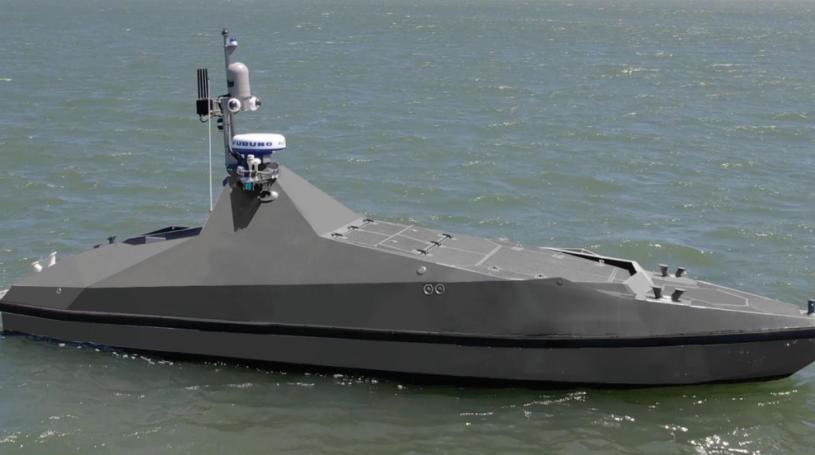
South Africa has entered the global autonomous maritime race as the Sea Serpent, the nation’s first locally designed Unmanned Surface Vessel (USV), successfully completed its rigorous sea acceptance trials.
The milestone has translated into commercial momentum, with production negotiations now underway for a high-profile client in the Middle East.
Developed through a collaboration between Noble Concentric Solutions, Legacy Marine, and Icarus Marine, the Sea Serpent represents a breakthrough in sovereign technological capability. The vessel passed testing in "very trying" maritime conditions, proving its reliability and high-level autonomy.
Sea Serpent features IMO Level 4 autonomous navigation, allowing it to interpret environments and avoid obstacles with minimal human intervention. Its sophisticated sensor suite and "over-the-horizon" communication links enable persistent surveillance at a fraction of the cost of crewed ships.
Project leader Eddie Noble says the project, which utilises local construction and integration skills, highlights the depth of South African engineering. Success would act as a catalyst for several key areas:
-- Defence: Enabling the Navy to practice against sea drones and develop swarming tactics.
-- Research: Providing platforms for underwater surveying and environmental monitoring.
-- Job Creation: Establishing a new high-tech skills category in autonomous control.
“This is the first to be built, integrated and tested here in South Africa, and more specifically it is the first multipurpose unmanned vessel which can be used for most maritime functions and quite easily be adapted for just about any function you want,” Noble said.
He said Noble Concentric Solutions is currently fielding leads across Africa and the Middle East, although the company’s focus remains on "starting at home."
“By fostering a local autonomous systems industry, South Africa positions itself as a regional exporter of high-end technology rather than a mere consumer,” Noble said.