
Security Partnerships Shield Cape Town Commerce as Leaders Warn: "Fix the Root Causes of Xenophobic Tension"
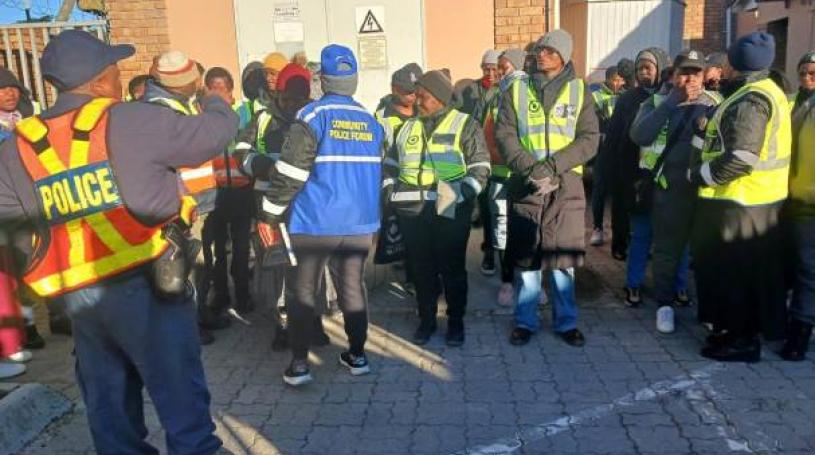
While coordinated public-private security partnerships successfully shielded Cape Town from widespread economic gridlock during yesterday’s protest campaigns, business stakeholders warn that the stability is temporary unless the state addresses underlying systemic failures. The seamless operational defense on the day prevented large-scale disruption, but leaders emphasise that treating the symptoms of social friction will not protect long-term investor confidence if the root causes are left unaddressed.
Hubert Paulse, Chairman of the Cape Chamber of Commerce and Industry’s Safety and Security Portfolio Committee, attributed the immediate outcome to this coordinated institutional response.
"While there was concern ahead of the planned campaign, the scale of disruption that many businesses feared did not materialise," Paulse said. "Visible law enforcement and security deployment, combined with structural coordination between authorities and private security partners, sufficed to maintain public order."
Data from regional economic stakeholders indicates that Western Cape operations significantly outperformed other major South African metro areas, such as Johannesburg and Durban, in minimising workforce absenteeism.
While manufacturing nodes across the country reported varying operational impacts on Monday morning, several large-scale industrial employers in the Western Cape reported full staff attendance. In contrast, multi-regional operations faced notable labor constraints in other provinces.
"Our Johannesburg branch experienced a 40% factory staff stayaway, KwaZulu-Natal was at about 25%, and Port Elizabeth saw 15%," noted one manufacturer, confirming that their Cape Town facility remained completely unaffected.
Despite macro-level continuity, the threat of unrest still imposed a measurable financial and operational burden, particularly on small, medium, and micro enterprises (SMMEs). Out of caution, multiple small business owners, including many foreign-owned retail shops, chose to shorten trading hours or suspend operations entirely to mitigate security risks. Absenteeism also saw localised spikes; one factory manager noted that daily non-attendance rose from an average of under ten workers to twenty, driven primarily by foreign national employees staying home as a safety precaution.
Rather than a return to complete normalcy, the day required businesses to actively absorb costs by restructuring staff schedules, scaling up private security protocols, and relying on private escorts.
The core warning from economic stakeholders is that short-term crisis management cannot become a permanent strategy for economic stability. The underlying drivers of the protest—specifically community discontent over crime, unchecked immigration, and a lack of labor law enforcement—remain largely unaddressed.
The Chamber noted that these deep-seated challenges must be funneled into strict, lawful, and institutional processes to prevent cyclical threats to commerce. For long-term economic stability, business leaders argue that government must move past reactive containment and decisively enforce regulatory compliance across all sectors to secure an even playing field.
"The positive takeaway is that Cape Town remains stable, and the cooperation we saw demonstrates what can be achieved when law enforcement, the private sector, and communities coordinate," Paulse concluded. "However, it serves as an explicit reminder that the structural issues surrounding crime and immigration regulation require urgent, lawful resolution to protect public safety and economic assets over the long term."
Dee Moskoff, Chairperson of the Cape Chamber's NPO Portfolio, said fear, exclusion and social division was no foundation for a stable, growing economy. "The non-profit sector stands on the frontlines of community safety, humanitarian support, and social integration. While the concerns of local businesses and residents regarding crime and regulation are entirely valid, they must be addressed through constitutional, lawful channels."
The NPO Portfolio warns that xenophobia and the scapegoating of foreign nationals do not solve systemic economic or security challenges. Instead, they disrupt local supply chains, threaten small business operations, and destabilize the very communities that local businesses rely on.
"NPOs play a critical role in bridging the gap between vulnerable groups, local businesses, and government authorities," Moskoff continues. "Yesterday's quiet streets are a reminder of how quickly uncertainty can freeze economic activity. We must protect our social cohesion if we want to protect our economy. We urge all community leaders, business owners, and residents to reject vigilantism and instead work with NPOs and law enforcement to build safe, inclusive neighborhoods."