
Rooibos in outer space? SA's first 'extraterrestrial’ crop to be planted in the Cederberg
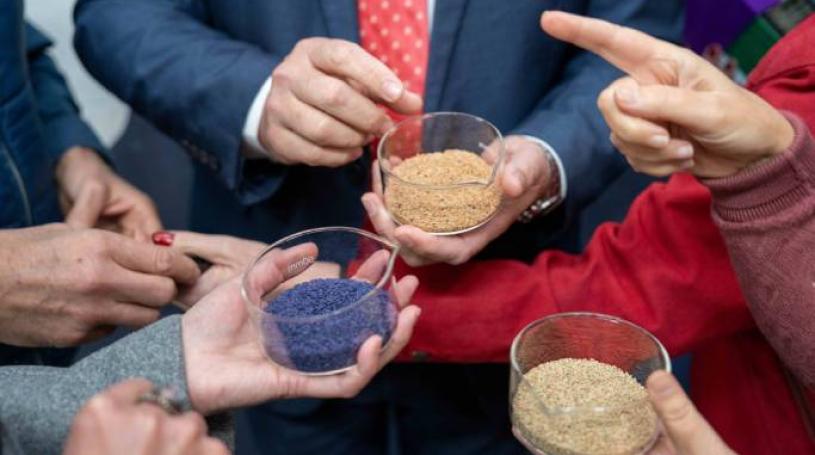
South African Rooibos seeds are heading to the International Space Station this October in a landmark space biology experiment conceptualised by the South African Rooibos Council (SARC) in partnership with MaxIQ Space and SANSA. In this Q&A, SARC Director Dawie de Villiers answers key questions about the groundbreaking project, and what will happen to the seeds when they return to SA.
Are these the first 'space-exposed' seeds to be planted in South Africa?
While Nigeria has previously sent indigenous egusi seeds to the International Space Station (ISS) as part of a space biology experiment, this is believed to be the first South African project to do so with an indigenous crop. Indigenous Rooibos seeds will travel to the ISS in October and remain aboard for six weeks, exposed to microgravity and space radiation, before returning to Earth. Their subsequent growth will then be compared against identical Earth-bound control seeds.
You say they will then be planted in the Cederberg and at Parklands College. Where exactly? Will it be at the schools involved in the project or at existing commercial Rooibos sites?
The space-exposed seeds will be planted alongside identical control seeds as part of a comparative study. For participating schools in the Cederberg, planting will take place within the Rooibos-growing region—the only place in the world where Rooibos grows naturally and is commercially cultivated, thanks to its unique combination of climate, soil, and terroir. Depending on what is most practical for each participating school, planting will occur either on school grounds or on a nearby commercial Rooibos farm, allowing learners to monitor the plants regularly under authentic growing conditions.
Parklands College, while situated just outside the endemic growing region, will also participate. Their seeds will likely be grown in a greenhouse-type environment using soil brought in from the Cederberg to replicate natural conditions as closely as possible.
Will the project bolster the Rooibos brand internationally by putting a global spotlight on the crop?
Yes, we believe it will. Although the project's primary focus is scientific research and STEM education, it showcases Rooibos on a global stage. As part of international research into the future of agriculture in space, Rooibos gains exposure to new audiences worldwide, elevating its profile and generating fresh interest in this uniquely South African plant.
Do we know which tea is drunk on the ISS? Has Rooibos ever been consumed there, or any other South African produce?
Astronauts have access to a variety of beverages on the ISS, including tea and coffee, though specific varieties vary between missions and space agencies. We are not aware of any official record confirming that Rooibos has been consumed aboard the ISS, nor of any South African produce being part of the standard ISS menu. That makes this Rooibos seed experiment particularly significant.
Historically, Rooibos was harvested by indigenous communities who faced systemic barriers to land ownership. Is there historical symbolism in seeing Rooibos reach space?
The project represents an opportunity to celebrate Rooibos’ uniquely South African heritage while looking to the future. Rooibos is intrinsically linked to the traditional knowledge of the Khoi and San communities, who played a vital role in identifying and preserving its value. Many of the Cederberg learners participating in the project share Khoi and San heritage, making this a special opportunity for them to advance the story of a plant so closely connected to their cultural heritage through cutting-edge space research. It's a once-in-a-lifetime educational experience and a chance to be part of scientific research that very few young people anywhere in the world have the opportunity to experience.
Rather than framing it as historical justice, we see it as a celebration of Rooibos’ remarkable journey – from the mountains of the Cederberg to the International Space Station – bringing together traditional knowledge, modern science and the next generation of innovators.
You refer to the potential of 'space agriculture'. What might this actually look like? Are we talking about crops on the Moon in greenhouses?
Potentially, yes. Space agencies worldwide are investigating how crops can be grown reliably in space to support long-duration missions to the Moon, Mars, and beyond. This could include controlled-environment greenhouses on the lunar surface or in future Martian habitats. Research like the "Rooibos in Space" project contributes to the broader global effort to understand how plants respond to orbital environments, helping scientists develop more resilient crops for space exploration while generating agricultural insights for Earth.