
"Research to Results: Q&A with Ravini Moodley on Scaling Innovation
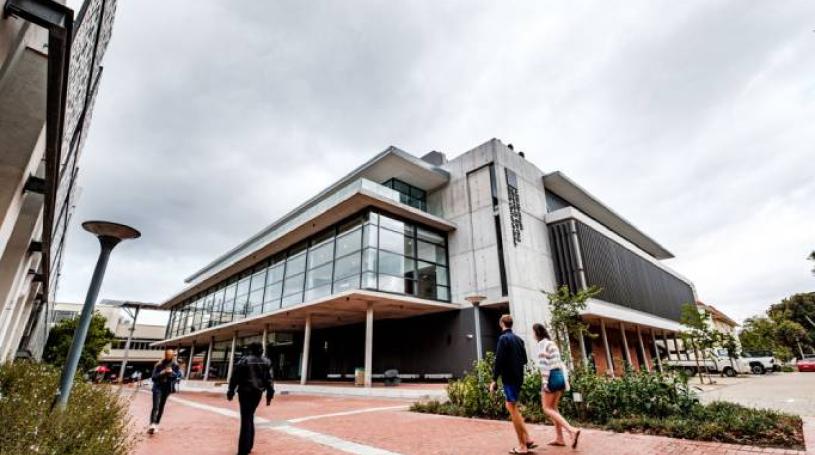
Moodley is the Director of the INNOVUS Technology Transfer Office at Stellenbosch University
From your perspective, how has the definition of 'valuable innovation' shifted in recent years? Why is shifting our focus from abstract, isolated ideas toward scalable, market-ready solutions so critical for driving job creation and macro-resilience in the current South African economic climate?
Over the past few years, the definition of ‘valuable innovation’ has shifted quite significantly. It’s no longer enough to simply have a clever idea, a patent, or a proof of concept sitting in isolation. Today, valuable innovation is measured by its ability to solve real economic problems at scale — creating jobs, improving efficiency, opening markets, and strengthening resilience within local industries.
In the South African context especially, we cannot afford innovation that can’t be implemented. We operate within a highly constrained economic environment characterised by unemployment, energy instability, logistics challenges, and increasing global competition. That means innovation must now be practical, adaptable, and commercially executable.
The real opportunity lies in connecting university research outputs with industry-leaders that are looking to drive future competitive advantages. With the right partners we can develop scalable, market-ready solutions that have the power to create sustainable employment, strengthen supply chains, and improve productivity across sectors. When innovation becomes embedded in local industries — agriculture, logistics, manufacturing, energy, health, or fintech — it contributes directly to socio-economic growth.
Many brilliant ideas or local patents unfortunately stall before reaching commercial viability. What do you see as the biggest operational bottlenecks South African entrepreneurs face when trying to scale a solution, and how can public-private ecosystems better bridge that gap?
In South Africa the phenomenon of deindustrialisation has affected us significantly. Our universities and research institutions have developed excellent capabilities to produce world class research outputs, but SA industry is not necessarily supplying markets of scale and scope that will purchase the novel products and services. Thus, industry is not always willing to invest in risky technology solutions. It is important for public-private partnerships to connect investors and potential beach head markets to enable novel technologies to be deployed at scale.
At Stellenbosch University Innovus TTO we assist researchers and industry partners to navigate intellectual property, legal, technical, financial, and market challenges. In this way we help to navigate the ‘chasm’ and build bridges to enable new technology businesses to become commercial successes.
Stronger public-private partnerships are essential. Universities, government, corporates, and industry bodies all have different resources to contribute. Academia generates research and talent, government can create enabling policy and incentives, and the private sector provides routes to market and operational scale. In the Western Cape we are lucky to have excellent public-private partners and industry bodies like the Cape Chamber of Commerce and Industry who want to cooperate to grow our economy and solve challenges the difficult development challenges we face.
The Cape Chamber’s upcoming Innovation Awards on June 1st heavily emphasise a pragmatic results chain—measuring local economic impact and the adaptation of best practices to fit our unique regional logistics. How well do these criteria align with what you look for in a sustainable, high-impact innovation?
I think the Awards’ emphasis on measurable economic impact and regional adaptability is extremely well aligned with innovations from university research portfolios. The Sustainable Development Goals (SDGs) are key drivers in many of our research projects. Some of our spin-out companies that have emerged from university research demonstrate an important institutional mechanism to translate research into novel products and services that can be made available locally and globally.
The real question is: does the innovation create measurable value within the environment it operates in? Does it improve efficiency, reduce costs, strengthen local industries, create employment, or solve a regional constraint? We can answer that with a resounding yes for many of our projects.
We are very proud of the spin-out companies and Stellenbosch University staff that received recognition at the 2025 Awards. We are hopeful that we will have similar success at the 2026 awards.
In your experience, what is the secret to getting these very different institutional cultures to collaborate successfully on commercialising new tech?
“The secret to successful cross-sector collaboration is alignment around a shared vision and commitment to positive outcomes for society in general.
Universities, government, and businesses all operate very differently. Academia is often focused on long-term discovery and world class training for students. Government prioritises policy, regulation, and socioeconomic outcomes. Business moves according to market speed, commercial viability, and operational efficiency. There are obvious differences between the timescales that these partners operate in. It is therefore so important to understand each other’s priorities or concerns and then manage expectations accordingly.
Collaboration works well when those different cultures are connected through a clearly defined common objective.
In my experience, the most successful partnerships are built around practical implementation. When all parties can see a direct pathway to value — whether that’s commercialisation, job creation, skills development, or industry competitiveness — alignment becomes much easier.
The Western Cape actually has a strong foundation for this kind of collaboration because we already have world-class universities, a sophisticated business community, and innovation-friendly government institutions. The next step is simply improving coordination and creating more structured mechanisms for collaboration at scale.”
You recently reached out to the Cape Chamber with an exciting new opportunity for our business members. Could you unpack the core details of this initiative and explain exactly how it will help our members lower the cost of doing business or improve their supply chain efficiencies?
We meet quarterly as the Western Cape Technology Transfer Forum. The four universities and some of the research institutions based in the Western Cape gather to discuss the opportunities and challenges they experience. We all have the role of understanding the research pipeline in our institutions and finding opportunities for commercialisation. Since our work is quite specialised and often confidential, when working new technologies and patents it is great to have a community to understand and support each other. This community of practice allows us to share best practice and expand our networks.
We also want to encourage innovative companies in the Western Cape to come and share their technology and innovation challenges with us, so that we can connect them to the researchers and experts in our institutions who may be able to develop solutions. By encouraging conversations between industry and researchers we will be able to unlock opportunities to improve the competitiveness of Western Cape firms and even access new markets. Sometimes the solutions that industry seeks may have already been developed in academic laboratories.
Innovation is often perceived as something reserved for high-tech start-ups or heavily funded corporates. How does the opportunity you are presenting ensure that ordinary small and medium enterprises (SMEs) in the Western Cape can actively participate and benefit?
Small and Medium Enterprises (SMEs) are widely recognized as vital drivers of economic growth. Meaningful upgrades to value chains often occur when SMEs and large companies collaborate, leading to enhanced competitiveness and productivity across entire sectors. The introduction of new technologies into these value chains must be carefully planned, and universities can play a crucial role by providing expertise in technology scouting, selection, and deployment.
In the Western Cape, we aim to foster stronger connections between firms and Technology Transfer Offices. By encouraging dialogue and collaboration, we hope to stimulate more joint research initiatives and, ultimately, the deployment of innovative solutions tailored to local needs.
"With top provincial leaders and economic pioneers gathering at City Hall on June 1, what is your long-term vision for the Western Cape's innovation ecosystem? What should business owners be doing today to ensure they aren't left behind by the next wave of disruption?
I believe the future economy will increasingly reward regions that can combine innovation with execution speed, collaboration, and adaptability. The Western Cape is well positioned to lead in sectors such as agri-tech, renewable energy, logistics innovation, digital infrastructure, health innovation, and smart manufacturing.
For business owners, the most important thing is to remain adaptable and continuously engaged with change. The next wave of disruption will not only come from technology itself, but from changing business models, data-driven decision-making, automation, and evolving supply chain ecosystems. Businesses that embrace collaboration, digital transformation, operational efficiency, and continuous learning will be far better positioned to thrive. Partnering with Universities and research institutions offers an opportunity to continuously access new knowledge, skills and a glimpse of the future.