
Q&A with Chantel Cooper: Healing Closer to Home: The Public-Private Ecosystem Tackling Child Burn Care in the Winelands
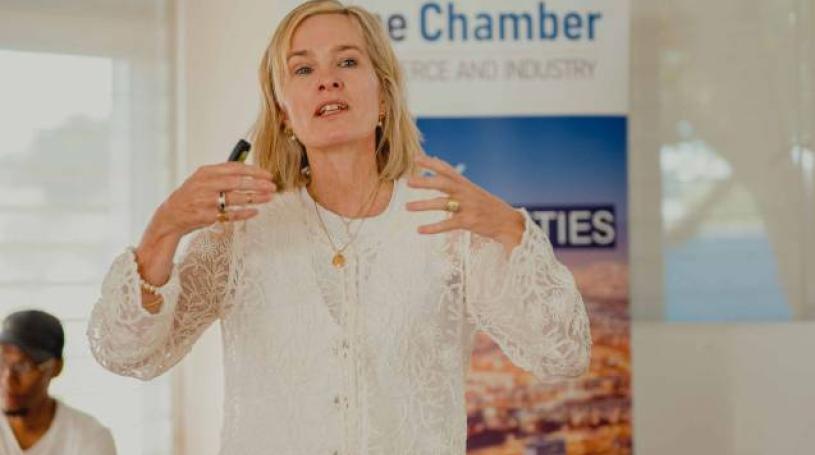
Chantel Cooper is the Chief Executive Officer of the Children’s Hospital Trust.
Business and NPOs are engaging to solve solutions, thereby setting the behavioural culture withing the ecosystem. In the Cape winelands, this collaboration is helping address a shortage of healthcare for child burn victims..
1. A key objective of the Burns Services Strengthening Project is to improve wound care infrastructure and equipment at select clinics and hospitals. How is this progressing?
Child healthcare in the Western Cape continues to face significant challenges, including high levels of poverty, increasing demand on the public health system, long travel distances for children and their caregivers, staffing constraints, and low confidence among staff in providing clinical care for children.
In 2022, paediatric burn care was identified as one of two strategic priorities for the Red Cross War Memorial Children’s Hospital (RCWMCH), with a focus on improving access to care through regional service strengthening to ensure that children receive care closer to where they live. To support this vision, the Children’s Hospital Trust received an offer of assistance from Georgetown University. Under the guidance of the RCWMCH Chief Executive Officer, Dr Anita Parbhoo, a team of Georgetown Leadership MBA students partnered with the Trust to conduct research and develop a comprehensive framework to strengthen paediatric burns care across the Western Cape.
Officially launched in 2024, the initiative focuses on strengthening paediatric burns and wound care across the Western Cape, particularly in the Cape Winelands districts of Worcester and Ceres. Through a collaborative ecosystem approach involving the Western Cape Department of Health and Wellness, the RCWMCH, the district hospital in Ceres, the Regional Hospital in Worcester, a Community Health Centre in Worcester, the University of Cape Town, and private sector funders, the project has supported infrastructure and equipment upgrades, healthcare worker training, improved referral pathways, and stronger communication systems. This was all established with the overall purpose of improving access to quality wound and burns care closer to the communities that need it most.
In just under a year, the project is already demonstrating the powerful impact of strengthening healthcare systems through collaboration and regional capacity building. We are seeing improved communication systems between rural facilities and the burns team at the RCWMCH, stronger engagement around appropriate referral pathways, and nurses who are now more confident to provide wound care for children closer to where they live. Importantly, many children no longer need to travel to Cape Town for treatment, reducing the emotional and financial strain on families and allowing care to take place closer to home.
At the Children’s Hospital Trust, we believe sustainable healthcare improvement requires more than isolated interventions; it requires connected ecosystems of care that bring together the public sector, universities, civil society, and the private sector. This project is not simply about equipment or infrastructure; it is about enabling local healthcare workers, strengthening regional healthcare capacity, improving continuity of care, and ultimately creating a more resilient and accessible healthcare system for children from vulnerable communities.
2. The focus area is the Cape Winelands. Is this due to the Winelands region being underserved in terms of health infrastructure? Are there plans to address similar problems elsewhere?
The Cape Winelands was identified after analysing RCWMCH referral data, which showed that the highest number of children from rural areas being referred to the hospital for burns care were coming from this region. Importantly, not all children required tertiary specialist care for their burn wounds, yet many families were travelling long distances to Cape Town for treatment, with many losing their daily and weekly income. This highlighted the need to strengthen access to quality wound care closer to home, while also creating an opportunity for meaningful regional impact through focused intervention.
With the lessons learned from the Wound Care Project, the focus for the Children's Hospital Trust over the next 5 to 10 years is to build a scalable, evidence-based ecosystem approach to strengthening paediatric care across the Western Cape. This approach recognises that targeted investment in training, supported by strategic improvements in infrastructure and equipment, can significantly strengthen the capacity of healthcare workers and facilities at every level of the health system. While the initial focus has been on wound care, the long-term vision is far broader. Ultimately, the objective is to contribute to a more equitable healthcare system where access to quality healthcare is not limited by geography.
3. Can you describe how the private sector has played a role in this project? How did this come about?
Our private sector partners became far more than financial donors; they were instrumental in leading the understanding of the type of data required to build the business case and shape longer-term strategic thinking. This has become a powerful combination when integrated with non-profit expertise and purpose-driven thinking.
In addition to investing in the strengthening of the healthcare system that supports their families and the families of their employees, they contributed strategic thinking, financial planning expertise, and operational insight.
As a leader in the non-profit space, I learnt how to adapt both my knowledge and language to a more focused business approach. This included developing a business plan and understanding the importance of demonstrating the financial and systemic value of a sustainable service for government, business, families, and tertiary healthcare facilities across the province. Business-case thinking enabled me to assess and prepare projects with the same analytical rigor as a financial investment.
This model of partnership is now embedded in the preparation for our future projects as we continue to work collectively to strengthen the paediatric healthcare system in the Western Cape.
4. Another key project objective is skills training. The Children’s Hospital Trust partnered with the Harry Crossley Children’s Nursing Development Unit (CNDU) at UCT and Chelsea & Westminster Hospital Burns Service (ChelWest) in London. Is this an area where the private sector could get more involved?
The Trust has learnt over the years that while there is immense value in upgrading ageing infrastructure and replacing outdated equipment, systems cannot function effectively without skilled and confident healthcare workers caring for children on the ground. That is why the training component of this project has been so significant.
Through partnerships with the RCWMCH, the Harry Crossley Children’s Nursing Development Unit at UCT, and the Chelsea & Westminster Hospital Burns Service in London, we have been able to support specialised clinical training, mentorship through clinical internships at the Red Cross Children’s Hospital Burns Unit, and meaningful knowledge exchange that directly strengthens frontline care.
Shared training initiatives, clinical internships, and the dedicated WhatsApp support group have strengthened communication between the Ceres and Worcester health facilities and the RCWMCH, enabling real-time decision-making, collaboration, and clinical support.
As mentioned previously, the Trust will move into the future through an ecosystem approach as we work to strengthen paediatric healthcare systems in partnership with government, civil society, academia, and the private sector. There are significant opportunities for strategic collaboration through innovation partnerships, technology support, operational expertise, and long-term co-investment in paediatric healthcare workforce development.
At the Trust, we see immense value in creating platforms where healthcare, academia, philanthropy, and business can come together around shared goals. Skills transfer and capacity building remain among the highest-impact areas for this kind of collaboration.
5. The Cape Chamber is focused on strengthening collaboration between economic stakeholders across all sectors, drawing upon public and private sector expertise, as well as academia and civil society. Has this project provided any insight into a) the value of this collaboration; b) how it can best be implemented?
The Covid-19 pandemic demonstrated the critical importance and impact of working together rather than operating in silos. While collaboration has since increased across sectors, too much of it still happens in fragmented ways, with civil society often remaining on the periphery of critical strategic conversations, regardless of the sector. The data has already demonstrated the impact and value of civil society in South Africa, yet the question remains: at what point will civil society truly be viewed as an equal partner that brings equal value to the table?
As the leader of a respected non-profit organisation, I recognised the importance of understanding what our partners needed from us. I needed to understand their vision, strategy, priorities, and long-term plans so that I could engage in a language they understood and valued.
Over the years, particularly through the Burns Wound Care Pilot Project, I have learnt valuable lessons about strengthening mutually beneficial partnerships grounded in trust, shared purpose, and a common understanding of how we can work together as equal partners. Each stakeholder brings different strengths to the table, whether funding, technical expertise, strategic insight, operational experience, or deep community understanding. Meaningful impact happens when those strengths are aligned in pursuit of a shared goal.
I have also learnt that strong partnerships are not built by arriving at the table with a list of demands, but rather through listening, understanding, and identifying where our collective strengths can create sustainable impact together. Throughout this project, we recognised the opportunity for the Trust to play a role as a connector within the ecosystem, helping to unite stakeholders around shared objectives and ensuring that investments translate into sustainable, mutually beneficial, and patient-centred outcomes.
If there is one broader lesson from this project, it is that collaborative models create stronger, more resilient systems. They allow us to move beyond isolated interventions towards long-term, systemic change.