
From the President's Desk: Marion Island to the Supermarket: How Global Shockwaves Hit Home
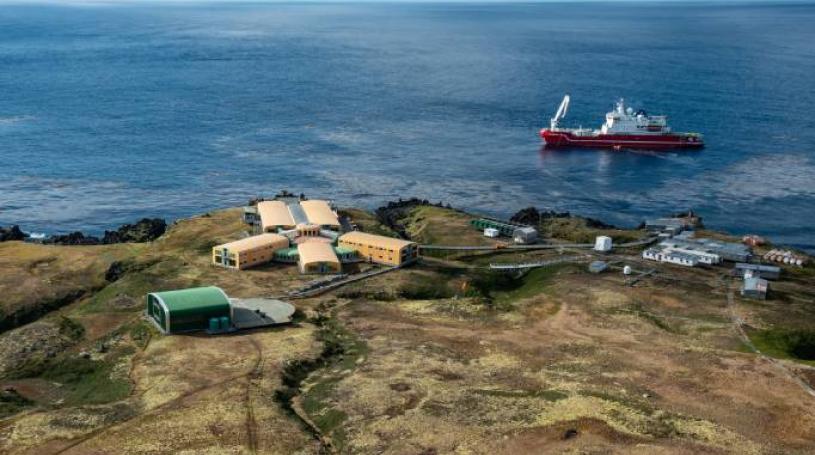
Spare a thought for South Africa’s scientists stranded on Marion Island due to the current fuel supply crisis.
When they arrived there in April last year, their biggest concern was climate change and the plague of house mice ravaging Marion seabirds.
Now the team must worry about their lift home.
The situation illustrates the global nature of just about everything we do. A bomb in the Middle East sends shrapnel rippling across the planet, impacting scientists thousands of miles away in the Southern Ocean. The impacts are more immediate here at home, where skyrocketing fuel prices affect every economic sector, at a time when household income is under pressure.
The most recent national household affordability index reveals a sharp reversal in food price stability, with the average cost of a household food basket spiking by 2.3% month-on-month (an increase of R123.66) to reach R5,452.09. This sudden surge breaks a four-month period of relative price stabilisation and reflects the immediate, broad-based pass-through of rising global fuel and input costs onto consumers.
When the current Marion over-wintering team set off on their journey last year, Brent crude was trading at roughly $73.00 to $74.00 per barrel. It is now $118.35 per barrel—a macro increase of over 60%. Coastal diesel cost R18.52 a litre; it now costs R30.62.
The price escalation is even worse for marine gasoil. When the SA Agulhas II set off in April last year the product was trading at $780 to $810 per metric tonne. It’s now at an unprecedented, all-time historic high of approximately $1,560 to $1,600 per metric tonne.
This impact underscores the urgent need to make our economy as resilient as possible, to better withstand external shocks. It also highlights the need for a whole-society response to the many challenges that erode our economic potential.
One such challenge is unemployment, which increased to 32,7% in the first quarter of 2026 compared with the last quarter of 2025, Statistics South Africa confirmed this week. It translates into a 345 000 decrease in the number of employed.
In this context the role of the private sector cannot be underestimated. The innovation and progress needed to grow the economy require active partnership, at all levels of society. Through our work programmes, our training, and our events, the Cape Chamber is committed to fostering this much-needed collaboration.
Our upcoming Western Cape Innovation Awards are a case in point. The event showcases our success stories across the entire economic ecosystem, inclusive of the public sector, the private sector, academia, and civil society.
In the same way that a missile in the Middle East hurts a shopper in Khayelitsha, a satellite technology innovation in Stellenbosch will have positive benefits way beyond our borders.
By focusing on solutions to our problems, we can make our interconnected world more a blessing than a curse.
Jacques Moolman. President of the Cape Chamber of Commerce and Industry