
Is the new Transnet port tender good for Cape Town?
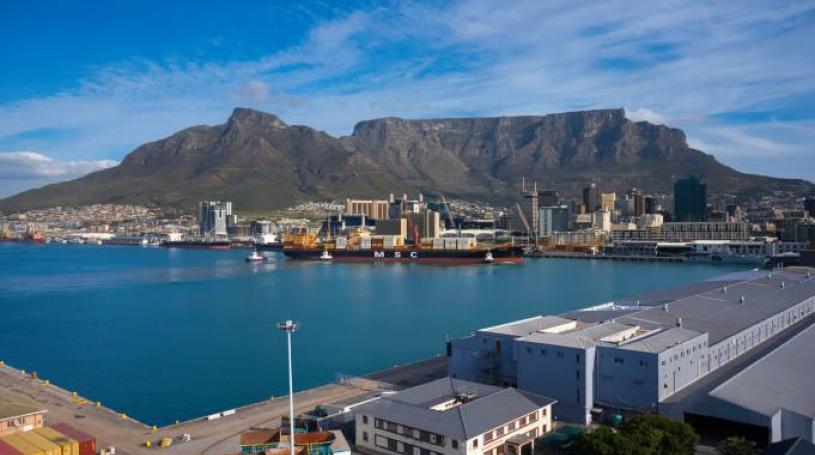
Transnet Port Terminals has invited private companies to bid for a 25-year concession to operate part of Cape Town's multi-purpose terminal, a key facility that currently handles approximately 80% of the Port’s agricultural bulk, break bulk (including 100% of fruit in specialised reefer vessels), and a significant portion of containerised cargo.
However, sources this week raised concerns that the tender doesn't go far enough by only including a section of the port already operated by a private entity, FPT Group (Pty) Ltd. The tender doesn't extend to parts of the port (the other parts of the multi-purpose terminal F – J Berth) that are currently underutilised, and managed by Transnet Port Terminals (TPT).
The FPT Group currently leases B, C and D Berth from TNPA which are dedicated berths managed and operated as a private multi-purpose terminal. Sources say the company has a proven track record of successful operation as a private terminal over many years and is expected to continue operating under private management. FPT has confirmed that operations will remain unaffected until the end of its lease at the end of 2027.
FPT currently also provides terminal handling services at A berth. It is unclear why A-berth has not been included in the TPT tender, even though it has been designated to remain part of the multi-purpose terminal.
Well-placed sources expressed surprise that the tender targets FPT's well-functioning operational area while other port precincts—such as the adjacent Cape Town Container Terminal (CTCT), managed by TPT—are in far greater need of operational turnarounds.
"Losing FPT would be a travesty as it’s such a well-managed business. It’s really efficient," noted one port stakeholder. FPT's five-year lease expires at the end of next year.
Another source pointed out that FPT's efficient handling of A Berth stands in stark contrast to TPT-managed operations, where attracting volume remains a challenge. A mobile harbor crane acquired at great expense for TPT berths was recently transferred to Durban due to underutilisation in Cape Town, the source claimed.
Despite these concerns, industry stakeholders expressed strong in-principle support for long-term private concessions, which enable operators to invest capital that short-term leases preclude. Provided reputable operators with proven track records are secured, stakeholders view the move as a step in the right direction.
"In general, this tender is very good news for the Port of Cape Town," one stakeholder remarked. "The MPT has been neglected and is in desperate need of investment. Although it cannot handle the same vessel sizes or volumes as the Container Terminal, it serves as a vital relief option when CTCT is congested. FPT is a great example of what can be achieved, even with limited infrastructure, to the point where it sometimes outperforms CTCT simply because it is run as a private terminal. Cape Town has advocated for private participation for years, so this news is very much welcomed."
The 25-year concession could also attract international shipping lines with deep balance sheets, potentially ushering in a new wave of capital investment across the port precinct.
Port stakeholders continue to seek further clarity from Transnet. The Cape Chamber will update this story as additional comments are received.
Meanwhile, Transnet National Ports Authority (TNPA) recently highlighted operational improvements at the port, with average Ship Turnaround Time (STAT) decreasing from 103 hours in FY 2023/24 to 74 hours in 2025/26, and down to 58 hours year-to-date.
"The port continues to advance private sector participation. Currently, nine out of eleven terminals are privately operated," TNPA stated.
"We remain focused on building a resilient, efficient, and globally competitive port that supports economic growth and trade facilitation," said Ophelia Shabane, Acting Port Manager for the Port of Cape Town. "These improvements align with Transnet’s Reinvent for Growth strategy, which prioritises fixing and optimising core operations to enable sustainable long-term growth."