
Investing in Inspiration: How Irma Stern’s Legacy is Empowering Cape Flats Youth
Displacement was a dominant theme in the life of South African artist Irma Stern, who had to flee war and discrimination multiple times with her family.
In a poignant turn, Stern's paintings experienced their own displacement last year when they were relocated to Norval Foundation from her former home in Rosebank as part of a two-year partnership between Norval Foundation, Nedbank, and the Irma Stern Trust.
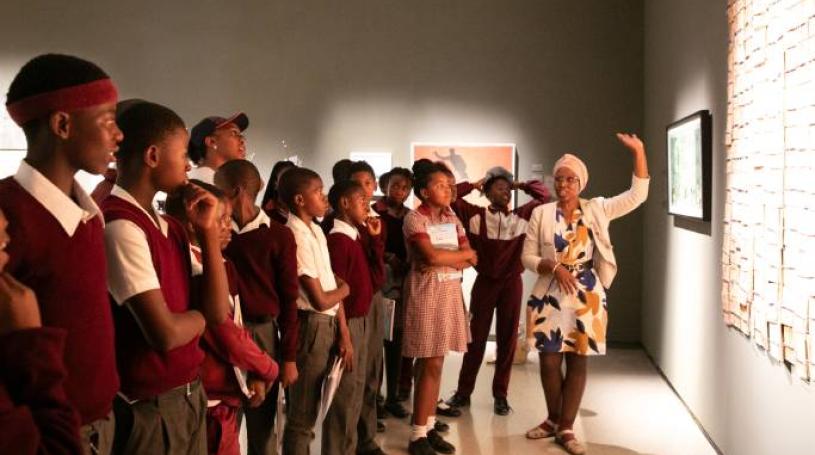
Now, history has provided a measure of redemption: pupils from the Cape Flats— the 'ground zero' of South Africa's long history of forced displacement—are being introduced to Stern's work through an ambitious art education programme run by Norval Foundation’s Learning Centre.
School groups from around the Cape receive guided tours of the Irma Stern exhibition at Norval Foundation in Tokai, learning about her life, her hardships, and viewing rarely seen artworks from her personal collection. The Learning Centre is built on the belief that exposure to Stern—and other acclaimed African artists—can plant seeds of inspiration or help young learners make sense of their own world.
The Foundation is now seeking sponsors to expand the initiative to reach as many children as possible across Cape Town and beyond. "So far our fully-sponsored programme has welcomed over 36 000 children, allowing them to learn about art and, hopefully, to be inspired," said Johann Vogel during a museum tour. "We feel very privileged to be the custodians of this Irma Stern collection. But we feel equally privileged to be able to make a difference to the lives of young South Africans, many of whom would never otherwise have access to these artworks."
The education programme combines art history lessons with practical workshops. "We integrate the curriculum references into our lessons by teaching skills such as comprehension, visual literacy, creativity, critical thinking, and problem solving," notes Vogel.
Opened in February, the exhibition is a multi-year collaboration establishing a series of four dedicated showcases over two years under the umbrella title Irma Stern: A life of displacement. Drawing exclusively on material from her archive and personal collection, it features rarely seen oil paintings, works on paper, personal documents, and travel artifacts collected during her journeys from Berlin to Zanzibar.
Born in Schweizer-Reneke in 1894 to German-Jewish parents, Stern's early life was disrupted by the South African War. Her father and uncle were interned in concentration camps by the British due to their pro-Boer sympathies, forcing her family to return to Germany. While studying art in Europe, World War I broke out, stranding her amid severe wartime scarcity and rising antisemitism. Upon returning to South Africa in 1920, her inaugural exhibition in Cape Town was met with intense public ridicule, with critics declaring her expressionist work "an insult to art." She would eventually overcome this hostility, establishing her reputation by her late forties and reaping global acclaim, including the Peggy Guggenheim Award in 1960.