
How a Covid lockdown phone call sparked a local biotech triumph
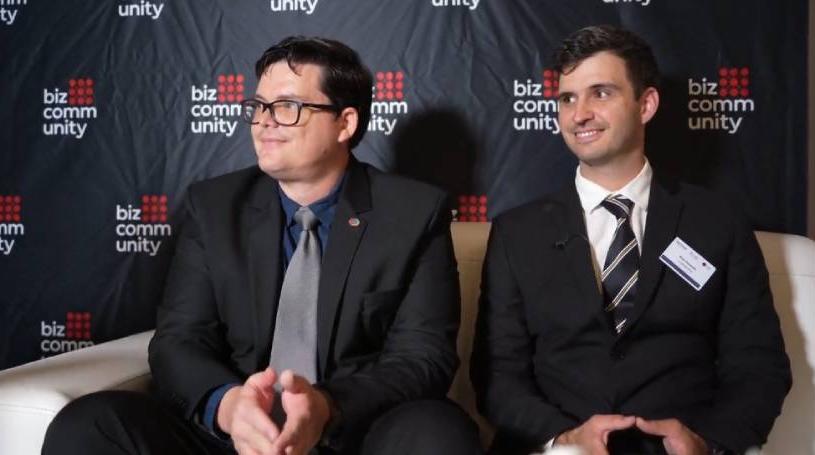
A chance phone call during the Covid lockdown sparked a local biotech success story of global proportions.
Stellenbosch biotech researcher Dr. Du Preez van Staden was invited to visit a Cape Town biotech lab at a time when Covid restrictions made it difficult to access imported proteins and enzymes. The private lab urgently needed these products to manufacture Covid tests and required immediate assistance.
The visit turned out to be a revelation. “I walked into their lab and had a real “wow” moment, because I realised that the work we were doing in our academic lab was already highly competitive and, in some areas, ahead of what I had expected.” Van Staden says of his ‘Aha!’ moment in Cape Town.
He returned to Innovus at Stellenbosch University, where he and his colleagues had been producing these proteins and enzymes for research purposes. They resolved to start their own private biotech company, harnessing local expertise to manufacture products previously thought to be beyond the commercial reach of local labs.
In the same way that enzymes and proteins form part of a biological chain, the birth of Fluorobiotech, founded in 2022, was due to a chain of events that led to industry recognition at this week’s Western Cape Economy Innovation Awards.
Now firmly established in Stellenbosch, the company specialises in producing high-quality proteins used in medical research and healthcare. Specifically, it manufactures recombinant proteins, which are critical, highly specialised components needed to develop and produce modern medicines and vaccines. By manufacturing these complex ingredients locally, the company helps reduce reliance on expensive international imports.
Because recombinant proteins are typically the one of the most expensive and technically challenging ingredients in vaccine production, Fluorobiotech's localised manufacturing platform aims to make these life-saving medical technologies more accessible and cost-effective for the African continent.
Van Staden says it has been a case of opportunity in adversity, with the urgency of Covid-19 providing the initial impetus. Other challenges, such as load shedding, provided further motivation to succeed — and to find local solutions to local problems. “We asked ourselves, how can we take everything we’ve done over 15 years plus and put it together into a package that solves a lot of the problems we faced, and one of the problems we sat with was load shedding. We asked, how do we get rid of some of the critical equipment that gets in the way, causing bottlenecks, and how do we reduce our reliance on imports?”
The team engineered an innovative process that allowed them to produce products that previously had to be imported at a much higher price.
However, that was only step one. Van Staden and his team still needed to prove their worth to an international market sceptical of African biotech expertise: “In order to get that uptake we needed to first convince them that we make high-quality products, so we got external validators to show that it works.”
Another crucial step in this process was logging numerous successful custom projects, one of which put them on the international map: making raw materials for mRNA vaccines.
Institutional support and the growth of an enabling economic ecosystem are two other crucial ingredients driving the growth of the local biotech sector, Van Staden says. The company is promoting a LaunchLlab and Centre for Epidemic Response and Innovation (CERI) initiative at Stellenbosch University, LaunchLab CERIBio, to help other startups in the hope of expanding the sector's footprint. “It’s like they said – it's all about the ecosystem. People like investing in ecosystems. They want to see that you are not building in isolation, but are supported by a broader ecosystem including other businesses that contribute to a more circular and resilient local economy.”
Dr. Ross Vermeulen, Fluorobiotech Chief Operating Officer, says the international community is still learning about the Western Cape’s research and development capacity: “They don’t realise that the Western Cape has a phenomenal capacity to do this wild frontiering research.”
He says Fluorobiotech’s innovative systems have now raised the bar in terms of process efficiency. Whereas the local sector was once considered too fledgling to compete with global players, the company is now setting new benchmarks. “Enzymes and these other complex raw materials may be common, but here we have to do things in an uncommon way to make them accessible. The way we’ve done it has potentially changed the way it is done around the world.”
“We realised what happened in Covid, and we want to see that changed. We’re not going to be pushed aside,” Vermeulen said.