
Global solar bloom to add fuel to WCape green energy jobs boom?
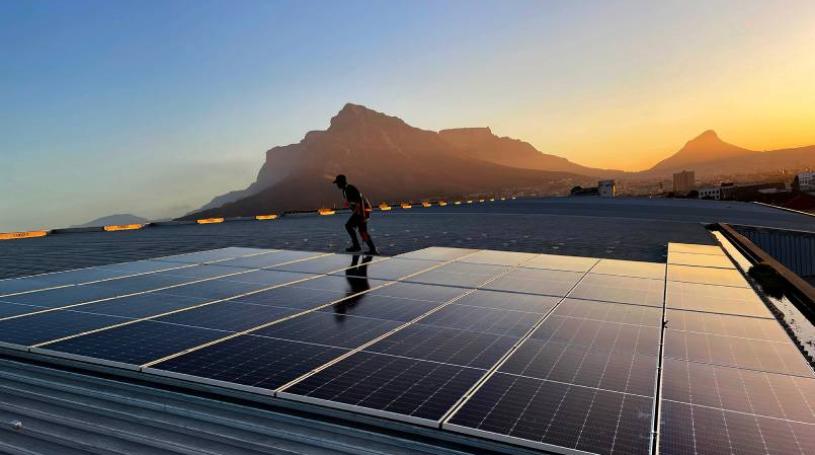
A massive 600 terawatt-hour worldwide surge in solar photovoltaic (PV) generation last year augurs well for the Western Cape’s green economy, local renewable energy stakeholders say.
The global solar PV surge marked the largest structural increase ever recorded in a single year for any electricity generation technology, according to the International Energy Agency's (IEA) latest Global Energy Review. The IEA noted that solar PV was the single largest contributor to growth in global energy supply, accounting for more than 25% of the increase—the first time on record that a modern renewable source has led global primary energy supply growth.
Escalating global demand is expected to translate into increased investment in renewable energy component manufacturing, with the Western Cape rapidly emerging as South Africa's regional green-tech hub. The province is already capitalizing on this momentum through established facilities like GRI Renewable Industries in the Atlantis Special Economic Zone, which manufactures utility-scale wind turbine towers, and Solar MD in Richmond Park, which produces localized lithium-ion battery storage systems for commercial solar arrays.
“I would say it’s indirectly good news,” said Frank Spencer, South African Photovoltaic Industry Association (SAPVIA) spokesperson. “Cheap renewables equal cheap green power, which equals more investment. As we see more and more cheap renewables built in the Western Cape, particularly behind-the-meter for industrial business parks and the like, that directly supports broader economic investment.”
The World Bank rates the African continent as having the highest solar potential on earth, thanks to its geographic positioning, with South Africa's Northern Cape and Namibia ranking right at the top of global hot spots. The baseline generation cost—known as the Levelised Cost of Electricity (LCOE)—has plummeted, making utility-scale solar the cheapest source of new energy in history. Globally, the average cost to generate utility-scale solar sits at roughly R0.65 to R0.80 per kWh , whereas building and running new coal-fired power options and maintaining associated infrastructure has pushed the consumer rate to between R3.40 to R4.50 per kWh.
Energy stakeholders say solar investment is no longer about avoiding load shedding; it's about reducing household or business operational costs.
“The employment potential in the Western Cape’s green economy is immense, provided we focus on the right segments of the value chain,” commented Tumisang Kalagobe, Growth & Partnerships Executive at Plentify, an energy technology company. “The real opportunity for South Africa lies in downstream services, software, and integration. This includes grid orchestration, electric vehicle charging infrastructure, smart logistics (such as last-mile electric delivery), and the specialised technical skills required to install and maintain these assets.”
Jo-Anne Smetherham, media manager for Fossil Free SA, agreed that the Western Cape is strategically placed to expand its local green economy as the "Just Transition" away from fossil fuel dependence gathers pace globally. “Businesses saw the writing on the wall after the Paris Agreement and have been scaling up renewables fast... to the extent that they are now several times cheaper than coal, oil, and gas,” Smetherham said.
Over the past two years, South Africa has added between 2.5 and 3 gigawatts of solar photovoltaic (PV) capacity, driven largely by embedded generation in the commercial and industrial sector, as well as a fast-growing private off-take market, according to SAPVIA.
SAPVIA is calling on government to actively prepare the local grid and policy frameworks for the accelerating solar boom, which continues to be driven domestically by the soaring cost of Eskom's coal-fired electricity.
“South Africa is experiencing a solar boom, but we are not yet fully translating that momentum into local industrial growth, especially in areas of the value chain where it makes sense to do so,” SAPVIA CEO Dr. Rethabile Melamu said in an industry statement.
“Without urgent policy alignment, a clear demand pipeline, and long-term commitments to manufacturing and tax incentives, the opportunity to build a competitive local manufacturing sector could slip away," Melamu warned. "A resilient industrialisation agenda must be underpinned by the reliability and affordability of electricity, which currently remains a work in progress.”
Looking at the long-term horizon, the macroeconomic benefits of navigating this transition appear substantially positive for the workforce. Research commissioned by the Presidential Climate Commission indicates a likely net economy-wide gain of 600,000 to 1.4 million net jobs as a result of the renewable energy transition. This projected gain accounts fully for the phased decommissioning of legacy coal infrastructure, pointing to an aggressive expansion of renewables, green hydrogen, and localised clean-tech manufacturing that is expected to soundly outweigh job losses in traditional fossil fuel sectors.