
Geopolitical crisis redirects vessels to Cape Town drydocks
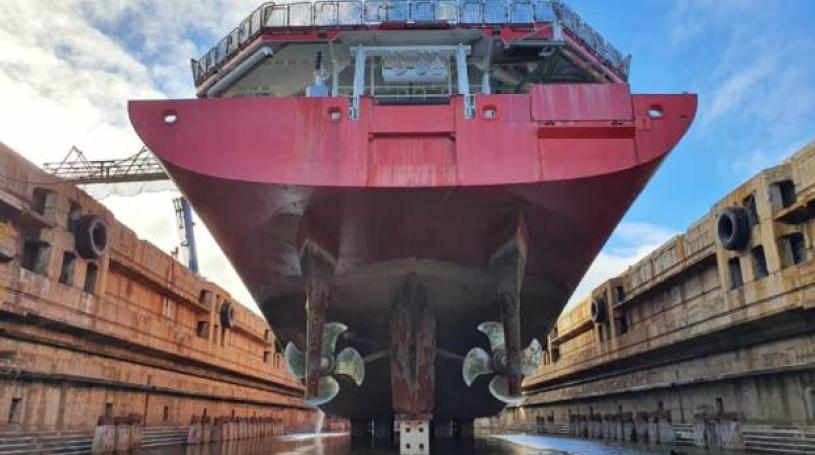
In a welcome boost for local ship repair, two large vessels meant to drydock in the troubled Middle East have relocated to Cape Town’s Sturrock drydock.
Transnet National Ports Authority has confirmed the arrival of the two vessels, a 185m chemical tanker and a 205m liquid petroleum gas (LPG) carrier. Repair work on just one of the ships involved about 400 people, providing a valuable injection in the local economy, according to TNPA’s Sikhokhele Mngoma who addressed last week’s monthly Cape Town Port Liaison Forum. “Due to geopolitical issues there (in the Gulf), the vessels have ended up in Cape Town, and we are doing our utmost to ensure they become return clients,” Mngoma said.
The ship repair surge is a measure of consolation for extensive negative impacts of the Middle East crisis on the broader economy, notably skyrocketing fuel and transport costs.
However, TNPA believes the crisis could at least provide an opportunity for TNPA to showcase its ship repair expertise. “For now it is just two vessels (rerouted to Sturrock from the Gulf). Cape Town will definitely become an alternate (ship repair site) in future, especially if this drydocking goes well,” Mngoma said.
The Port’s drydocking facilities are currently in demand, with various other visits scheduled for later this year, and even bookings for 2027 and 2028. An offshore supply vessel is due at the Sturrock drydock as soon as a space becomes available.
Meanwhile, TNPA’s other ship repair facilities are currently fully subscribed. These include the synchro lift and the Robinson drydock, situated adjacent to the Victoria and Alfred Waterfront.
He said South African drydocking facilities, including those in Durban and East London, are benefiting from a shortage of space at Chinese facilities, another knock-on effect of the Middle East crisis.
However, TNPA still needs to address inhibiting factors such as an ongoing skills deficit and need for proper drydock facility succession planning. “We’re trying to fast-track that training as much as we can. The next generation of dockmasters need to learn from the current crop, to take the skills forward. I think there is definitely a skills challenge in the country that we have to address,” Mngoma said.