
From Garage Dust to Premier Recognition: A Profile of Suraya Williams
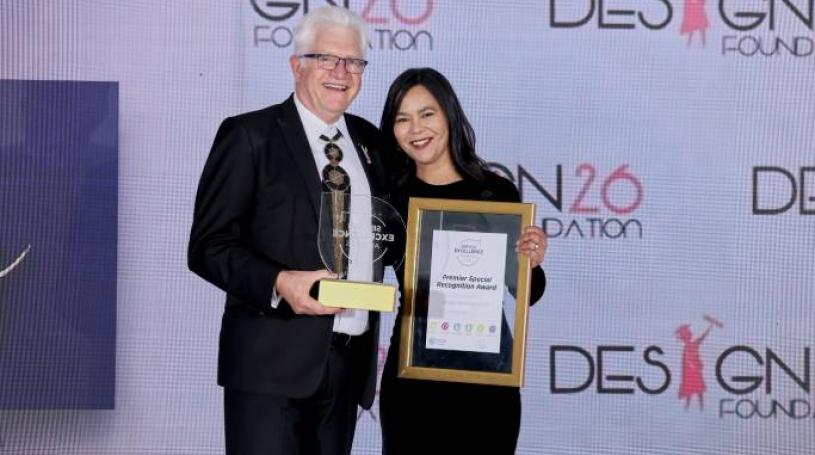
When a late mother’s inherited sewing machines were carried out of a garage to stitch a single party dress, it sparked a journey that has led to a dual commercial-NPO powerhouse, and earned the Premier’s Special Recognition Award.
1. Growing up, when did you first realise you had a certain 'flair' or sense of style? Or is it something that evolved steadily over time?
Suraya Williams: I think it was something I absorbed without realising it. I grew up watching my mother sew, cut patterns, and turn fabric into clothing. I never formally studied fashion design or manufacturing, but I was exposed to it from a very young age.
Interestingly, I never imagined I would pursue a career in this industry. It was only much later in life, when I unexpectedly made my first dress, that I discovered I had a natural ability for something I had watched my mother do for years.
2. Am I correct that you were partly inspired by your mother, a renowned CMT in her community? Was it her dream for you to follow in her footsteps?
Suraya Williams: Absolutely. My mother was a dressmaker and CMT (Cut, Make, and Trim) operator who was well known in our community. She always hoped I would follow in her footsteps, but I never saw clothing manufacturing as a career for myself.
When the clothing factories in Cape Town closed, my mother was retrenched and had to start sewing from home to support her family. Despite her talent, limited education and resources meant that she struggled to grow beyond a small home-based business. Watching that experience discouraged me from entering the industry.
After my mother passed away on my birthday, 26 January, I inherited two sewing machines which I stored in my garage. Sometime later, a family member asked me to make her daughter a 21st birthday dress. I was working in corporate at the time and initially declined because I didn't know how to sew. She left the fabric with me anyway.
A few weeks later, on a Saturday, I asked my 13-year-old son to help me take my mother's machines out of the garage. I called my family member, took her daughter's measurements and, drawing on everything I had watched my mother do, I made the dress.
When I finished, I was overwhelmed. I couldn't believe I had made it. It felt almost like an out-of-body experience. I continued working in corporate, but something had changed. Making clothes gave me a sense of closeness to my mother, and I felt drawn towards doing more.
With my husband's support, I resigned and registered Design26 the following day.
The name 26 represents my birthday and the day my mother passed away. I started with her two sewing machines and R500 of my own money to open a business bank account. I never imagined where that decision would eventually take me.
3. Where did you grow up, and what impact did your family/community have on you and your ambition?
Suraya Williams: I grew up in Rocklands, Mitchell's Plain. My upbringing exposed me to the resilience and resourcefulness of people living in communities where opportunities were not always readily available.
My mother's experience had a particularly significant influence on me. I witnessed what happened when women lost their jobs in the clothing factories and had to find ways to survive through home-based sewing businesses.
Today, I see many of the same challenges facing young women in our community. That is one of the reasons I am so passionate about creating opportunities locally. I don't want young women to feel that where they come from determines how far they can go.
There is something special about being able to build a business in the community where I grew up and contribute to changing opportunities for the next generation.
4. How would you describe your path to success? Did you take the conventional route of tertiary training, followed by corporate work? Or did you strike out on your own at an early stage?
Suraya Williams: My journey was certainly unconventional. I was working in the corporate world when I discovered my ability to make clothing. I had no tertiary qualification in fashion design or manufacturing, and my first dress was made using what I had learnt simply by watching my mother.
After resigning, I initially focused on fashionable women's clothing, matric dance dresses, and wedding dresses. I learnt the business through experience, making mistakes, taking risks, and constantly looking for ways to improve.
Over the years, I have invested in my own development through business programmes, including the University of Stellenbosch Business School's Small Business Academy, mentorship, and other entrepreneurial development initiatives.
I believe you don't have to have everything figured out before you start. Sometimes you discover your greatest opportunity by being willing to take a chance on yourself.
5. Can you tell us about Design26 and what prompted you to take the leap down this path?
Suraya Williams: Design26 (Pty) Ltd is a Cape Town-based clothing manufacturing and retail business specialising in apparel, corporate gifts, promotional products, embroidery, and DTF printing.
Initially, I was focused on growing the clothing business. However, working with matric girls who came to us for their matric dance dresses made me realise that the challenges facing young women had not changed much since I left school. Many struggled to find employment, lacked work experience, couldn't afford further studies, or were dealing with difficult social circumstances.
I started questioning what opportunities existed for these young women and how I could use the skill I had discovered to make a difference.
That led me to establish Design26 Foundation in 2018, a separate non-profit organisation providing free practical sewing skills training and workplace readiness for unemployed and marginalised young women.
The two organisations work together: the Foundation develops skills, while the commercial business creates opportunities for workplace experience and employment.
We have also developed a circular economy initiative, transforming textile offcuts into home décor products. We have diverted more than 4,200kg of textile waste from landfill and are exploring partnerships with corporates to repurpose retired uniforms into corporate gifts, furniture, and home décor.
My bigger ambition is to change the narrative for CMT women. I want to see women move beyond working from small garages and become manufacturers, business owners, employers, and suppliers in their own right.
6. Have you always been passionate about social development? Would you say this is underpinned by a value system you inherited, or developed over time based on your own life experience?
Suraya Williams: It developed through my own experiences. Initially, I wanted to build a successful clothing business, but the more I interacted with young women in Mitchell's Plain, the more I realised that having a business also gave me an opportunity to address challenges I understood personally.
I saw women with potential but without access to skills, employment, or the financial means to pursue further education. I also thought about my mother and the many skilled women whose knowledge was never transferred to younger generations.
I realised that I could use my business to do more than create products. I could create opportunities.
For me, social development is not about creating dependency. It is about equipping people with practical skills, confidence, and the opportunity to become financially independent.
7. Was it difficult to establish Design26? How did you go about attracting recruits?
Suraya Williams: It has been challenging, particularly because we started with very limited resources. We had two sewing machines, a small amount of working capital, and a vision that was much bigger than our circumstances.
We have had to grow gradually, reinvest in equipment, build customer relationships, and prove that a small manufacturer from Mitchell's Plain can deliver quality products.
For the Foundation, we attract beneficiaries mainly through community networks, referrals, social media, and word of mouth. Our programmes are aimed at unemployed young women who often have limited access to opportunities.
However, training is only one part of the journey. We also must help beneficiaries overcome barriers such as transport costs, family responsibilities, and a lack of workplace experience.
Since 2018, we have trained more than 1,320 beneficiaries and invested over R8 million into our community. Behind those figures are women who have gained confidence, learnt a practical skill, and found opportunities to earn an income.
8. Can you briefly describe your team and how you operate (i.e. the work streams and outcomes)?
Suraya Williams: We operate through two complementary organisations.
Design26 (Pty) Ltd handles manufacturing, product development, corporate orders, embroidery, DTF printing, quality control, and sales. We manufacture clothing, school apparel, promotional products, and corporate gifts. We have 4 permanent staff and 4 casuals, with workplace readiness students coming through our door every 3 months.
Design26 Foundation focuses on sewing skills development and workplace readiness for unemployed young women.
Our model connects training with actual manufacturing activity. The Foundation develops skills, while the commercial business provides an environment where beneficiaries can gain practical experience and potentially progress into employment.
Our longer-term goal is to develop a sustainable manufacturing and skills development model that creates opportunities beyond short-term training programmes.