
Forging Ahead: Q&A with Thandi Dywili of M&R Stainless Steel
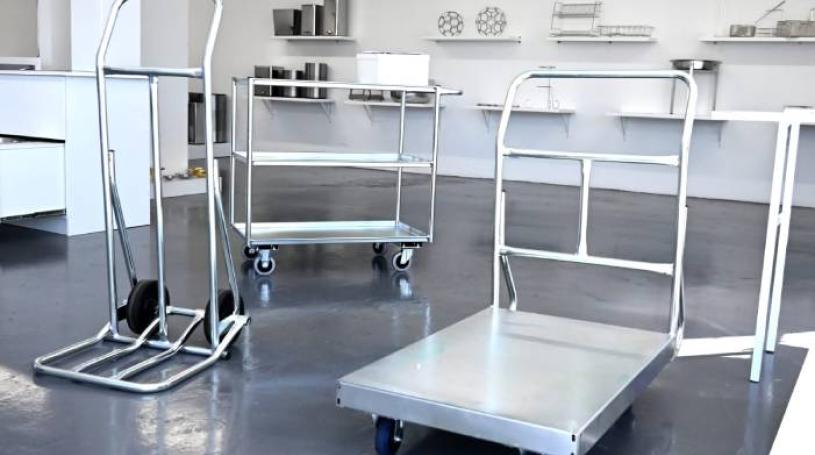
M&R Stainless Steel is a local toolmaker and manufacturer of high-quality metalware, steelware, and structural steel components. Operating on a 100% local sourcing model, the company relies exclusively on South African milled steel and mined minerals. M&R contracts 11 factories across South Africa, distributing its approved range nationwide through major retail partners—including Massmart’s Makro and Leroy Merlin—as well as its own e-commerce portal at mnrshop.co.za.

Q: You have led Lilitha Minerals and Resources since 2014, supplying smelters and foundries with alloys and ores. What motivated your strategic move downstream into manufacturing with M&R Stainless Steel?
Thandi Dywili: Lilitha Minerals supplies ores, alloys, and metals to the foundry and smelter industry. However, the South African minerals sector has been particularly volatile over the past three years and is inherently cyclical.
Our downstream diversification strategy developed out of three key realisations:
National Import Data: Reviewing national trade reports clearly highlighted the massive volume of finished metal products being imported into South Africa.
Local Steel Capacity: South Africa’s domestic steel mills have more than enough capacity to produce the sheet metal required for local manufacturing.
Job Creation: Manufacturing requires a workforce. Expanding downstream means hundreds of existing jobs can be sustained and new ones created.
Q: Why was there such a large gap in the market for locally manufactured metalware? Was it purely a matter of price, and how do you remain competitive?
Thandi Dywili: Historically, importing a container of finished metalware from Asia was cheaper than producing it locally. Overseas manufacturers benefit from lower labour costs, subsidised energy, and massive economies of scale.
South African manufacturers simply cannot compete on price alone. However, M&R supplies a much higher tier of metalware, and local consumers and businesses are increasingly recognising the long-term value of buying durable, quality-grade products at fair, affordable prices.
Q: M&R operates through a contract manufacturing model, partnering with 11 factories—some of which were on the verge of closure due to low demand, high electricity costs, and limited market access. How were you able to turn those facilities around?
Thandi Dywili: M&R delivers an end-to-end distribution solution that connects factory floor capacity directly to established commercial markets and off-takers.
In-house, M&R maintains a specialised team of toolmakers, engineers, and draughtspersons who design, craft, and present ready-to-build technical drawings directly to our partner factories. This eliminates the high product-development barrier for the plants themselves.
Q: Tariffs are a hot topic, particularly regarding steel. What is your position, and how should government balance these competing priorities?
Thandi Dywili: The International Trade Administration Commission of South Africa (ITAC) implemented a series of sweeping measures following its largest steel tariff review in two decades.
As a representative of the steel processing and manufacturing sector, my position on tariffs is deeply pragmatic. As fabricators, we rely on affordable, high-grade raw materials to stay competitive. Tariffs imposed on raw material exports assist local beneficiators to process steel for domestic mills. That policy framework ensures M&R can source 100% of its flat sheet metal locally within South Africa.
Q: M&R is navigating its first year of direct retail sales. Why are physical walk-in spaces so important for your business model?
Thandi Dywili: Because our key differentiator is high quality, buyers can only truly appreciate the craftsmanship by seeing and feeling the product in person. That makes an online-only retail model unviable for M&R Stainless Steel.
We initially launched in 2024 with a large walk-in store and toolmaking office in Montague Gardens, Cape Town. Over an 18-month period, we realized that while it is an excellent industrial manufacturing hub, it isn't ideal for retail foot traffic, especially on weekends.
We adapted by refining that footprint into a specialised display studio in 2026—just enough to showcase each metalware line—while expanding display space in Pretoria West. We are now preparing to open a dedicated commercial retail store in Johannesburg North.
Q: On a personal level, what motivates you daily?
Thandi Dywili: I am motivated by information. I read and research daily because you cannot participate meaningfully—socially or economically—without thoroughly understanding both the challenges and the opportunities. You can only contribute real, actionable solutions to spaces where you have personally assessed the gap.
Q: What would you say is the single biggest impediment to South Africa's economic growth currently?
Thandi Dywili: The biggest impediment is when leaders across both the public and private sectors act out of self-interest rather than collective purpose. We need to intentionally invest far more heavily in social responsibility. We have a collective duty to lift others.
Q: If you had a magic wand and one wish to improve the country, what would it be?
Thandi Dywili: If I had a magic wand (smiles), men would be home executives and women would lead all industries! On a serious note, I would open the hearts of human beings to give far more generously to the underprivileged.