
Crime puts the squeeze on Cape’s R56bn wine industry
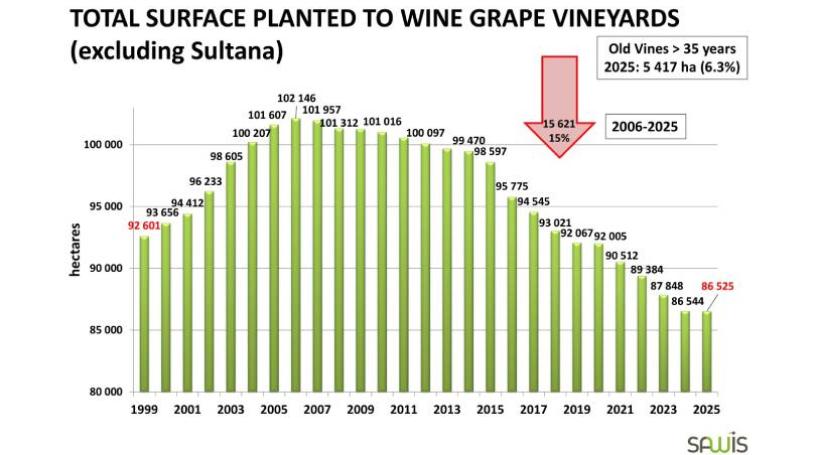
Ongoing crime is driving up input costs for the Western Cape wine industry at a time of structural contraction, characterised by shrinking vineyard footprints and declining production forecasts.
Industry data presented at last week's Cape Chamber-led Winelands safety and security dialogue reveals that the average long-term total production cost escalated at a rate of 6.16% year-on-year between 2016 and 2025.
While there are multiple factors behind this cost increase, the need for viticultural security adds further pressure. Ongoing concerns regarding rural safety, infrastructure vandalism, and supply chain security have forced cellars and estates to invest heavily in private security infrastructure, perimeter defense, and asset protection, according to the SA Wine Industry Information and Systems (SAWIS). These intensive non-productive inputs are severely eroding farm-level profitability and squeezing margins across the value chain.
The financial pressure coincides with a steady multi-year downscaling of South Africa’s primary wine-producing footprint. The total area of planted hectares has dropped sharply over the past decade, falling from 98, 597 hectares in 2015 to 86 525 hectares in 2025, with further slight contractions projected over the next few years to 81 040 hectares in 2034.
Behind this multi-year downscaling of South Africa’s vineyard footprint lies a structural shift in both domestic consumer behavior and global market dynamics. Domestically, the wine industry is grappling with a pronounced cultural pivot among younger demographics; Gen Z and younger Millennials are increasingly turning away from traditional wine consumption in favor of ready-to-drink (RTD) cocktails, craft beers, and non-alcoholic alternatives. This domestic demand flatlining is compounded by severe profitability pressures on primary producers. Rising input costs for power, fuel, and specialised goods have squeezed profit margins, within a context where replanting a single hectare of vines requires an immense upfront capital injection.
Total wine production is forecast to dip gradually over the next decade, sliding from the current seasonal level of 1.329 million tons down to an estimated 1.256 million tons by 2034.
The contraction comes at a critical time for both the provincial and national economies, highlighting a sector that is increasingly viewed as too structurally vital to fail. Despite current operational headwinds, the wine industry remains a key employer in the regional economy:
GDP Impact: The wine value chain contributes R56.5 billion to South Africa's national GDP, representing 0.9% of the total national GDP at market prices. Crucially, R50.9 billion of this total is generated directly within the Western Cape.
Labor Market Support: The industry sustains 270,364 jobs across the national economy—accounting for 1.8% of formal national employment—and generates R18.8 billion in vital household income. The vast majority of this labour infrastructure sits within the Western Cape, which supports 245,128 of those jobs.
The Tourism Multiplier: Wine tourism has solidified its position as an indispensable economic driver, generating R9.3 billion annually and accounting for 40,108 employment opportunities. Tourism assets have rapidly become the most important contributor to local cellar turnover, effectively subsidising primary agricultural operations amidst stagnant wholesale wine margins.
Economists and industry bodies note that the sector is also a driver of international tourism. Stakeholders are calling for elevated rural policing strategies and state-backed security integration to alleviate the high input costs currently threatening the long-term sustainability of the country's premium agricultural export.
“The Cape Winelands remain one of South Africa`s most important agricultural and tourism regions, but future success depends on managing growth, safety, infrastructure and economic sustainability,” SAWIS's Celeste Small said at last week's Cape Chamber dialogue.
.