
Chamber report highlights NPOs as economic force in Western Cape
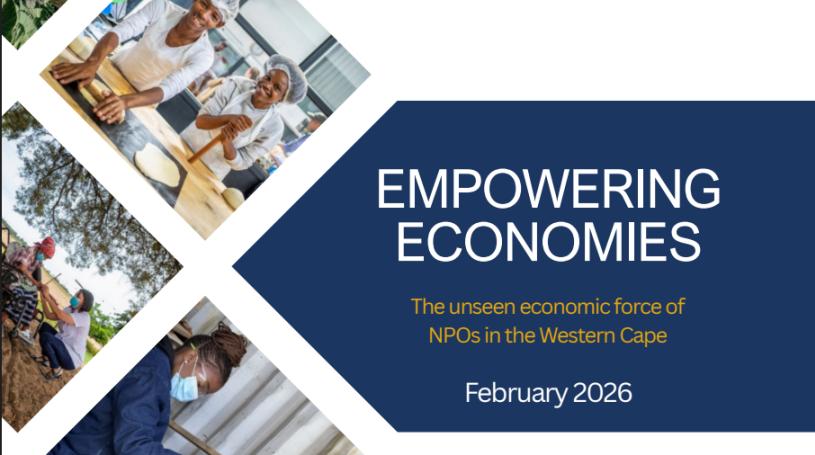
The Cape Chamber of Commerce and Industry this week formally launched its research report, "Empowering Economies: The Unseen Economic Force of NPOs in the Western Cape."
Commissioned by the Chamber’s NPO Portfolio Committee and produced in advisory consultation with Henley Business School Africa, the document provides an empirical analysis of the non-profit sector's role as a functional participant in the regional economy.
The report evaluates NPOs as economic entities rather than philanthropic organisations, detailing their contribution through direct employment, salary disbursements, and the procurement of local goods and services. It identifies the sector's role in developing human capital—specifically in healthcare, education, and skills development—as a primary requirement for long-term regional productivity and social stability.
Key economic metrics and sector characteristics identified in the report include:
-- Employment Generation: The 361 NPOs surveyed for the report collectively employ 21,398 people in various full-time, part-time, and consulting capacities.
-- Total Economic Value: The surveyed organisations represent a combined annual income of R1.49 billion, highlighting the substantial flow of funding they direct into the regional economy through salaries and the procurement of local services.
-- Human Capital Development: NPOs play a critical role in stabilising communities and supporting human capital through specialised education, healthcare, and skills development.
-- Market Participation: By providing crisis support and filling service delivery gaps, NPOs create the conditions necessary for more effective and sustainable market participation.
Jacques Moolman, President of the Cape Chamber of Commerce and Industry, noted the importance of this shift in perspective, stating: "While their social contributions are widely recognised, their economic impact is less understood. This groundbreaking research... provides clear evidence of the scale and value of the sector".
Findings indicate that NPOs frequently manage service delivery gaps in areas of high societal challenge, providing crisis support and employment assistance that facilitate market participation and stabilise local communities.
John Lawson, CEO of the Cape Chamber, emphasized the necessity of coordinated growth: "Sustainable growth requires coordinated effort, shared purpose, and strong networks. By integrating the non-profit sector more fully into structured economic dialogue, we strengthen the resilience and trajectory of the Western Cape economy".
The research includes data on the sector's scale, operational longevity, and governance frameworks, including director qualifications and due diligence standards. Deidré Moskoff, Chairperson of the NPO Portfolio Committee, highlighted the potential for deeper integration with the private sector: "For business and investment leaders, this presents a clear opportunity: to move beyond compliance-led engagement towards strategic partnerships that unlock both social and economic returns".
The report concludes that the Western Cape can more effectively utilise the sector’s specialised expertise and resources to support inclusive economic growth.