
The CEO Chirp: Rethinking mobility as an economic system
Public transport is often approached as an infrastructure challenge, a question of buses, trains, and routes.
But this framing is incomplete.
At its core, passenger mobility is a system that determines how efficiently an economy connects people to opportunity.
When that system underperforms, the consequences are not isolated to the transport sector. They are felt across labour markets, productivity levels, and ultimately, economic growth.
If we are to meaningfully improve mobility outcomes, we need to move beyond incremental fixes and consider the underlying system dynamics that shape them.
This is where a theory of change becomes essential.
Driving prosperity through accessible, safe, and efficient public transport requires a shift in how the system is structured, coordinated, and measured. It is not only about increasing capacity, but about improving the quality, predictability, and integration of movement across the network.
At present, the system is characterised by fragmentation. Rail, bus, and minibus taxi services each play a critical role, yet they operate with limited coordination.
For the commuter, this often means multiple fare systems, inconsistent schedules, and unreliable transfers. For employers, it introduces daily uncertainty around workforce arrival times, shift reliability, and overall productivity.
These are not isolated inconveniences. They are systemic inefficiencies that carry real economic cost.
The change required is therefore systemic.
Firstly, reliability must be treated as a core economic input. When transport systems fail to operate predictably, the cost is absorbed by both workers and businesses. Lost hours, missed shifts, and reduced output accumulate over time, weakening overall economic performance.
Secondly, accessibility must be understood in practical terms. It is not only about geographic reach, but about whether individuals can afford, trust, and safely use the system on a consistent basis. For many, the true barrier to opportunity is not distance, but the inability to move through the system efficiently.
Thirdly, integration across modes becomes critical. A functioning mobility system should enable seamless movement between rail, bus, and taxi networks. This requires alignment not only in infrastructure, but in planning, data sharing, and operational coordination. Without this, the system remains a collection of parts rather than a unified whole.
Importantly, these changes have direct beneficiaries.
For individuals, improved mobility expands access to employment, education, and economic participation. It reduces the time and cost burden of commuting and increases the range of opportunities available to them.
For businesses, it strengthens workforce reliability, reduces absenteeism, and improves operational efficiency. It also expands access to both labour and markets, particularly for small and medium enterprises operating in areas where mobility constraints are most pronounced.
At a broader level, the economy benefits through increased productivity, improved labour matching, and more inclusive growth.
However, achieving this requires coordinated action.
Government, transport operators, and the private sector each hold part of the solution, but meaningful progress depends on alignment across these stakeholders. Policy, infrastructure investment, and operational execution must move in the same direction if the system is to function effectively.
This is where structured engagement becomes necessary.
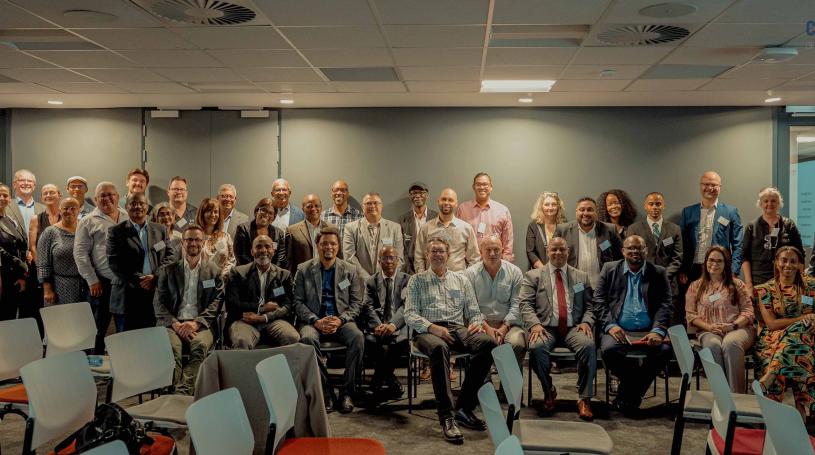
The Cape Chamber’s Strategic Dialogue Network (SDN) session on passenger mobility last week, 26 March, was not intended to revisit familiar challenges. Rather, it was designed to interrogate the system itself. To examine how these interconnected elements can be aligned to produce measurable economic outcomes.
The Chamber’s role in this process is to facilitate informed dialogue and bring together the perspectives required to support coordinated action.
Ultimately, the question is not whether we can improve individual components of the transport system.
The question is whether we are prepared to redesign the system in a way that enables consistent, reliable, and equitable access to economic opportunity.
Because when mobility works, the economy works.
John Lawson
CEO of the Cape Chamber of Commerce and Industry