
Cape Winelands Airport Plans Dedicated Sky Corridor for Drones and Next-Gen Aircraft
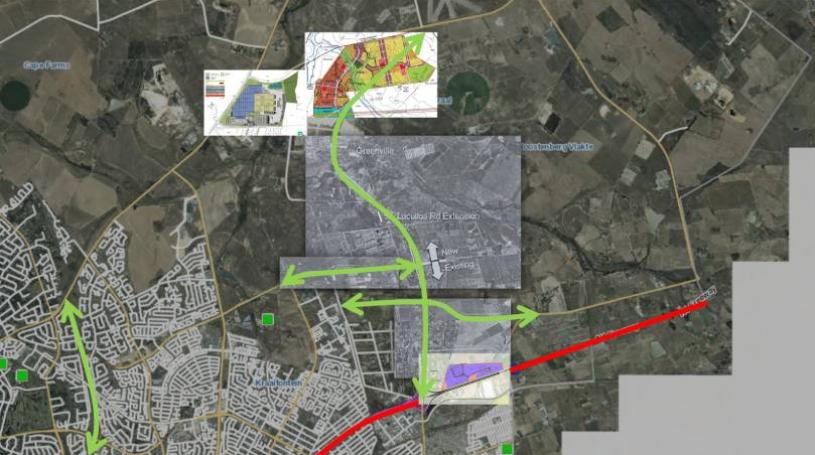
The developer of the R10-billion Cape Winelands Airport project has confirmed plans to design a dedicated "sky corridor" specifically reserved for commercial drones and futuristic aircraft, allowing them to fly and test safely alongside traditional passenger planes.
While airports naturally manage air traffic for standard aircraft, integrating unmanned drones and vertical-takeoff vehicles into passenger flight paths presents unique regulatory and safety challenges. Responding to queries from the Cape Chamber of Commerce and Industry, Cape Winelands Airport Managing Director Deon Cloete confirmed that the project is designing segregated airspace to solve this problem.
"It is early days for us, but as a future-looking airport in the transport business, we wish to explore with our partners the efficient and safe integration of all modern technologies being considered and tested for commercial use and operations globally," Cloete said. "This will be achieved through dedicated corridors within the broader airspace design and will be subject to the required industry consultations and regulatory approvals."
The project coincides with increased drone surveillance around Cape Town, particularly in some crime hot spots. However, drone deployment close to Cape Town International Airport is currently impossible due to safety concerns, the City of Cape Town this week confirmed. "Not all parts of the N2 can be monitored due to no-flight zones within the perimeter of the airport," said JP Smith, Mayoral Committee Member for Safety and Security, in response to Cape Chamber queries. "The drone unit on a regular basis to monitor for threats as part of the freeway management plan. Areas that are monitored on a frequent basis are Jakes Gerwel, N7 close to Dunoon, and parts of the N2 where it is permissible."
The inclusion of a specialised drone and Vertical Take-Off and Landing (VTOL) flight path forms part of a broader master plan to transform the former Fisantekraal Airfield into a tech-forward aviation ecosystem. Beyond serving as Cape Town’s second international passenger gateway, the 450-hectare estate is being developed to host advanced logistics, research clusters, and commercial operations.
The airport’s technology roadmap includes an envisioned "Aerospace Village"—a dedicated hub for space and aviation firms—alongside plans for an expanded satellite engineering center in partnership with Stellenbosch University.
On the ground, the boutique terminal will feature automated, technology-led passenger processing systems, incorporating smart check-in, biometrics, baggage handling, and AI-optimised air traffic and energy management systems.
Set to open its first phase by 2028, the airport aims to establish a high-tech regional logistics node while acting as a designated alternate airport for inbound international flights, cutting fuel burn and carbon emissions across the Western Cape’s aviation corridor.