
Cape Town port stakeholders hit back at “misleading” global ranking
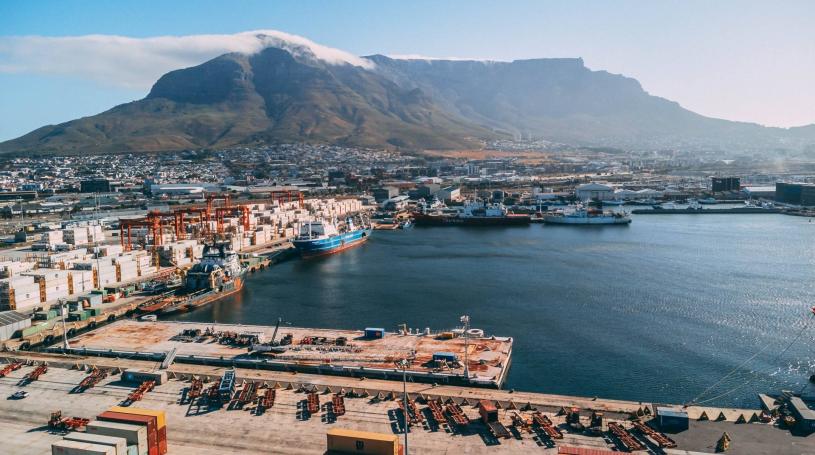
Cape Town Port stakeholders have raised concerns about the methodology behind a global port index report that ranks Cape Town as the world's worst-performing container port.
The latest Container Port Performance Index (CPPI), co-published by the World Bank and S&P Global Market Intelligence, ranked Cape Town 400th out of 400 global ports based solely on vessel turnaround times during 2025. The CPPI report attributes Cape Town's poor turnaround time to a combination of severe seasonal weather and legacy equipment failures.
However, local experts say the CPPI report fails to acknowledge multiple other factors affecting turnaround time, such as geography and geopolitical tension. The report's low ranking for Cape Town contrasts starkly with separate figures compiled by local stakeholders, which show markedly improved port performance last year, including reduced vessel anchorage time and increased port productivity.
Figures presented last week by the Southern African Association of Freight Forwarders (SAAFF) suggest the global index creates a misleading impression. “Time at anchor or arrival (influenced by weather, tides, pilotage, and geopolitical re-routing—notably the Red Sea Crisis) is included, meaning ports can be penalised despite stable berth operations—a key concern for South African ports,” SAAFF notes in a report authored by its Head of Research and Development, Dr Jacob van Rensburg. “CPPI is useful but insufficient; whole-system performance must be measured.”
Van Rensburg and other prominent stakeholders believe South Africa urgently needs to develop its own assessment tools to provide a more holistic analysis of the logistics ecosystem. “The CPPI is a measure of vessel time in port, and useful at that. However, the CPPI is not a whole-system metric of port performance,” Van Rensburg told the Cape Chamber this week in response to queries.
“It is a useful and consistent global benchmark for vessel time in port, and the Cape Town result should be taken seriously. However, it must be interpreted within its measurement boundary. Importantly, the CPPI does not measure the full logistics system: it does not capture cargo dwell time, landside evacuation, rail availability, road interface performance, cost, documentation delays, cargo-owner predictability, or end-to-end service reliability,” Van Rensburg said. “CPPI is useful within its measurement boundary, but dangerous outside that boundary. That distinction is important because South Africa should engage with the CPPI methodology seriously, but it should also develop complementary measures that reflect the full logistics chain.”
Cape Town has now slipped below Durban in the CPPI rankings. Durban emerged as the world's leading story for year-on-year improvement, climbing slightly out of the immediate danger zone to 398th. Other South African ports also fared better, including Coega, which was named the third-highest improver in the entire world for year-on-year operational gains.
Speaking in her personal capacity, SAAFF Chief Executive Juanita Maree said the CPPI report did Cape Town a disservice by painting an overly negative picture that could deter much-needed investment. “We need accurate data-sharing agreements, peer reviews, and technical experts with a deep understanding and knowledge of the South African port mode. Nowhere [in the CPPI report] can you see volume handling in a year paired with its volume ranking—volume and schedule do matter much more in supply chain movements."
“To put so much value on the World Bank CPPI is just wrong, but we can keep on saying this: we need to come with a new dataset, new realities, and fix what we can in South Africa. To rank South Africa at the bottom of the pile is incorrect. The world average for gross container moves per hour is 23; we in South Africa across all our ports average 18.”
Megan Gobey, Vice Chair of the Cape Chamber Transport and Freight Industry Sector Portfolio Committee, said the “disappointing” CPPI report did not reflect the actual operational improvements at the Cape Town Container Terminal (CTCT). “I really don’t think weather should be held against them, as putting in equipment to stop the wind is expensive. Already, the Cape Town Container Terminal wants to charge us a surcharge for new cranes, so I really think the World Bank needs to look at how they rate a port.”
However, stakeholders agree the CPPI report, though incomplete, nevertheless provides a useful global benchmark for local port authorities. It found that:
Container vessels spent just 56% of their total time in Cape Town at a berth actively loading or unloading cargo.
Nearly half (44%) of all ship time was lost to non-productive delays and waiting anchored outside the port limits.
While those specific statistics are not contested, stakeholders emphasize that they fail to reflect positive local turnaround indicators at CTCT, which include:
Volume: Terminal volume increased by 15.1% last year compared to 2024.
Anchorage Delays: Average time at anchorage dropped from 4.2 days in 2024 to 1.2 days in 2025 (Calendar Year).
Crane Utilisation: Efficiency is up by 8% year-on-year (Calendar Year).
Ship Working Hours: Productivity increased by 4% year-on-year (Calendar Year).
Terry Gale, Chairperson of Exporters Western Cape, says the figures reveal how vessel turnaround times can catch the headlines even when broader internal congestion indicators are improving. “Persistent weather-related disruption, combined with equipment reliability issues, led to high variability in ship times in port despite periods of easing supply chain stress. This deterioration was accompanied by a decline in berth utilisation, suggesting that vessels increasingly accumulated time outside productive berth operations."
"In response, Cape Town has introduced a predictive wind model developed with the Council for Scientific and Industrial Research (CSIR) to reduce weather-related disruptions, a helicopter piloting service to improve ship access during high swells, and a digital technology platform for cargo planning. The port’s CPPI trajectory underlines how structural exposure to external conditions can dominate performance outcomes, independent of global demand cycles,” Gale said.
Renowned maritime expert Terry Hutson, publishing on his Africa Ports and Ships platform, noted that the CPPI data highlighted the systemic performance gap between African container ports and global benchmarks. While acknowledging that the index regularly draws industry debate over its strict methodology, Hutson emphasized its value, stating it "remains one of the few consistent global benchmarks for container vessel turnaround performance—and a useful lens on where operational gains are being made, and where structural challenges persist."