
Cape Town leads monthly food basket increases in November affordability index
Cape Town recorded the steepest monthly rise among tracked areas in the November 2026 Household Affordability Index, with its food basket climbing by R92,80.
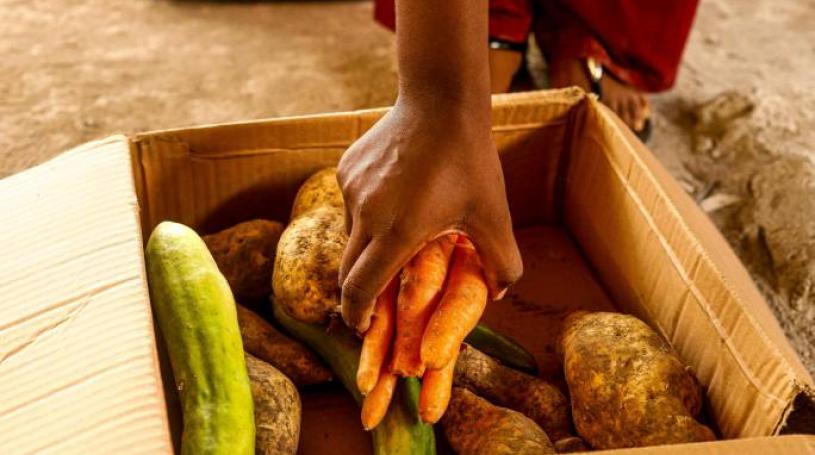
The Pietermaritzburg Economic Justice & Dignity Group (PMBEJD) release does not state a specific reason for Cape Town's increase—noting only that area-level figures appear in the full index—while showing that across the 44 tracked foods, 22 rose and 22 fell, led on the upside by oranges (+26%), wors (+6%) and chicken feet (+6%), and on the downside by drops in butternut (-16%), carrots (-10%) and onions (-7%).
PMBEJD’s index tracks the prices of 44 basic foods across 52 supermarkets and 36 butcheries in seven areas—including Cape Town, Johannesburg, Durban, Pietermaritzburg, Mthatha, Springbok and Mtubatuba—to gauge household food affordability. Unlike the standard Household Food Basket, PMBEJD’s dietitian-designed Basic Nutritional Food Basket reflects the foods needed for proper, healthy nutrition rather than what low-income households can currently afford.
Nationally, the average Household Food Basket edged up R18,30 (0,3%) month-on-month to R5 530,83 (up 2,2% year-on-year). Against a Basic Nutritional Food Basket of R6 708,19 for a seven-person household, low-income families face a minimum 18% underspend—or R1 177,36 a month—pointing to a deeper nutrition gap than headline basket costs show.
Meanwhile, a general worker on the maximum 20-day November National Minimum Wage of R4 836,80 loses R3 183,45 to electricity and transport, leaving R1 653,35—a 56,9% shortfall against a R3 838,00 basic nutritional basket for four.