
Cape Tech Company Tackles AI Demographic Bias with Local Model Trained on Cape Town’s Diverse Population
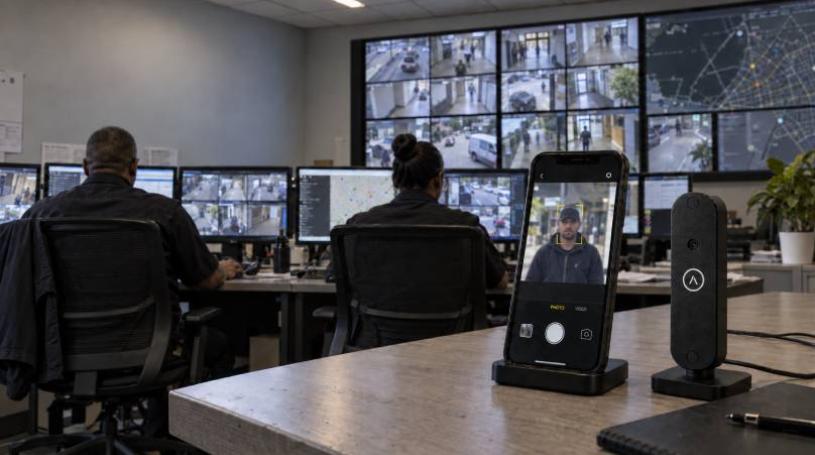
Artificial intelligence facial recognition is benefiting from South Africa's racial diversity, particularly in Cape Town, where locally developed technology is currently deployed at one of the city's highest-priority crime hotspots.
A home-grown AI application combined with locally developed devices has been trained to recognise all faces equally, producing significantly more accurate results than imported software trained in Asia, Europe, or North America, according to local technology expert Ansu Sooful.
Globally, the deployment of artificial intelligence in facial recognition has long been fraught with systemic demographic bias. Independent benchmarks—most notably extensive testing by the U.S. National Institute of Standards and Technology (NIST)—have repeatedly revealed that mainstream commercial algorithms exhibit significantly higher false-positive rates when processing non-Caucasian faces. In many foreign-developed platforms, false match rates for Black and East Asian individuals were found to be between 10 and 100 times higher than for light-skinned male subjects.
"Facial recognition has been around for a long time, but a problem with it was that it lacked accuracy, and it did not work very well on Black faces," said Sooful, chief executive of Cape Town-based Aizatron, which is working with police in Philippi East. "AI facial recognition is typically built in Asia with Chinese models, or in the West with mainly white faces. When deployed in Africa, it struggled a lot."
"But Cape Town is one of the most diverse locations in the world from a genealogy perspective. So when you train AI models in Cape Town, they become very robust and accurate in terms of determining people's faces—there's a huge gene pool to draw from," Sooful said.
Sooful explained that the AI currently deployed in Philippi East required a 'bottom-up' approach to ensure both software accuracy and frontline usability. "The technology needs a lot of work and modification to work in the South African context. We worked with a SAPS team in the Western Cape, and we developed our technology with them. By working with SAPS officers at grassroots level, we made it a lot more usable for SAPS to deploy."
Purpose-built, locally manufactured hardware and software are better equipped to address local operating realities and upgrade SAPS's legacy technology solutions.
Looking ahead, Sooful believes South African tech companies are well positioned to export their locally developed solutions to international markets.
"I want to export this technology to the rest of the world. Why not?" Sooful said. "We employ brilliant engineers from UCT and Stellenbosch University. We are creative and can build fantastic solutions. We must export technology, not only minerals and raw materials. This way, we can build a very strong economy."