
Cape to Harness the Winds of Change? Top Exec Says Renewable Costs Have Fallen Faster Than Expected
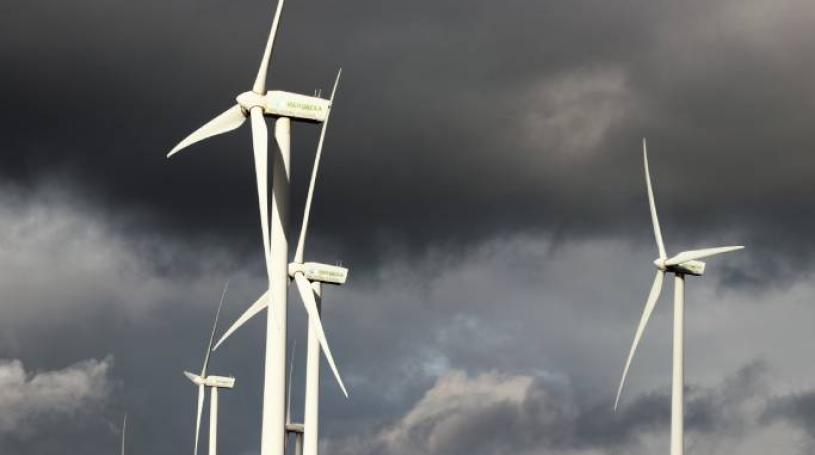
With renewable energy technology costs dropping rapidly, the Western Cape is uniquely positioned to secure significant industrial and employment benefits from the green transition. To understand how the region can capitalise on this shift, the Cape Chamber of Commerce and Industry spoke with Johan Helberg of Vestas—a global leader in sustainable energy solutions, specialising in the design, manufacture, installation, and servicing of wind turbines across more than 80 countries.
Chamber: Which regions would be most likely to benefit from additional employment?
Helberg: The greatest near-term employment benefits are likely in the Eastern Cape, Western Cape, and Northern Cape, where wind resources and existing project activity are strongest. However, the opportunity should extend beyond coastal provinces. Mpumalanga, in particular, can benefit from renewable energy supply chains, skills development, and industrial diversification as coal generation gradually declines. Jobs will not only be in construction, but also in turbine maintenance, engineering, logistics, digital operations, environmental services, and project management.
Chamber: Is the energy transition running ahead of schedule? Have renewable costs fallen faster than expected?
Helberg: Renewable costs have fallen faster than many expected, especially for wind and solar, driven by technology improvements, scale, and more efficient global supply chains. In South Africa, however, the overall transition is not ahead of schedule. While deployment is increasing, particularly through private-sector investment, grid constraints remain a major barrier. The key shift is that renewables are now being adopted because they are economically competitive, not only because of climate objectives.
Chamber: Has there been a shift in political will around Eskom reform and unbundling?
Helberg: Yes, there has been meaningful progress. The establishment of the National Transmission Company of South Africa, the creation of Eskom Green, and broader electricity market reforms show stronger political recognition that the power system must accommodate more private generation and investment. However, reform now needs to be intensified and prioritised. Investors need predictable implementation, faster grid access, clearer procurement timelines, and consistent execution to keep pace with market ambition.
Chamber: Are we missing a golden opportunity? What would accelerate reform?
Helberg: South Africa has a major opportunity to build a competitive renewable energy and wind industrial base, but uncertainty risks slowing investment. The strongest accelerators would be a clear and regular procurement pipeline, faster grid expansion, streamlined permitting, continued market reform, and consistent implementation of the Integrated Resource Plan (IRP) and South African Renewable Energy Masterplan (SAREM) objectives. These measures would provide stronger investor confidence than any external geopolitical shock.
Chamber: Do we risk losing investors if policy uncertainty continues?
Helberg: Renewable energy investors assess both probability and choice: the probability that projects can be delivered on time, and the choice of allocating capital to other markets if uncertainty remains high. Policy is a critical enabler. If procurement is inconsistent or grid access remains unclear, investment decisions may be delayed or redirected. South Africa still has strong fundamentals, but investor interest must be converted into bankable projects through certainty, execution, and stable demand.
Chamber: What international best practice could help South Africa expand the grid?
Helberg: International experience shows the value of an independent transmission system operator with a clear mandate to plan, invest, and provide transparent grid access. Brazil, the United Kingdom, and parts of Europe have expanded renewables by combining long-term network planning with stable procurement and competitive markets. South Africa should prioritise transmission investment ahead of demand so that ready projects are not stranded by grid constraints.
Chamber: Can renewable energy provide a new dawn for manufacturing and coastal communities?
Helberg: Yes, provided South Africa creates sustained market demand and capitalises on its industrial base, port infrastructure, and skills potential. Coastal regions such as the West Coast and Eastern Cape can benefit from manufacturing, logistics, engineering services, and long-term maintenance activity. The immediate localisation opportunity is skills development, while a stable project pipeline can unlock supplier development, component assembly, and eventually larger-scale manufacturing investment.