
Bridging Science and the Soil: How Data-Driven Innovation is Securing the Future of Cape Viticulture
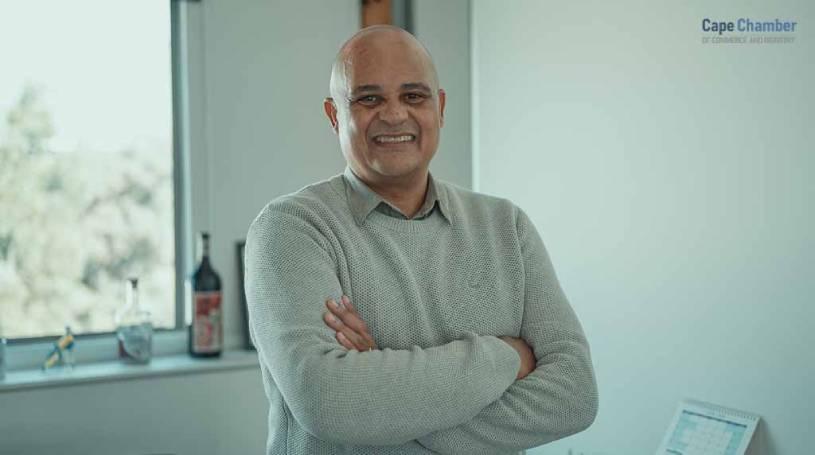
At the beginning of June 2026, the Cape Chamber of Commerce and Industry, in partnership with the Cape Higher Education Consortium, hosted the annual Western Cape Economy Innovation Awards. Honoured among the region’s trailblazers for driving systemic economic innovation was Gerard Martin, Research, Development, and Innovation (RDI) Executive at South Africa Wine (SA Wine). In this Q&A, Martin discusses how translating complex agricultural research into practical, localised tools is equipping Western Cape wine producers to navigate escalating operational pressures.
Chamber: Your award-winning innovation centres on aligning complex agricultural research with actual producer needs. In plain terms, what does this look like on the ground? How is a busy farmer physically interacting with and receiving this research?
Martin: Various platforms enable busy farmers to engage with research outcomes without having to search for the information themselves. We collaborate closely with Vinpro to take research directly to producers through regional information and technical field days held twice a year. We also facilitate study groups and expert viticulture and wine forums, where producers can hear first-hand from researchers about new knowledge and practical solutions that they can implement in their businesses.
In addition, we publish research outcomes every month in popular-style articles in Wineland magazine, both in print and online. Over the last few years, we have also produced a range of practical books, available in both hard copy and electronic formats, covering topics that are highly relevant to producers.
We work closely with cultivar associations, service providers, and input suppliers to extend the reach of new knowledge across the industry. More recently, we have expanded our digital engagement through webinars, social media, and online platforms to ensure producers have easy access to the latest research. Ultimately, our goal is to make research practical, accessible, and easy to implement for even the busiest farmer.
Chamber: We know the data covers environmental factors like climate and terrain, but does it expand into the tough economic realities farmers face—like soaring input costs and shifting global market dynamics? Who is actually producing all this raw data, and how fresh is it when it reaches the producer?
Martin: Absolutely. We recognise that producers do not make decisions based only on climate and environmental conditions; they also need to understand the financial implications of those decisions. Ultimately, profitability is what determines long-term sustainability.
The South African Wine Industry Information and Systems (SAWIS) produces a range of monthly, quarterly, and annual statistical and economic reports that provide valuable market and industry intelligence. We also co-fund Vinpro's Production Plan, compiled by its agricultural economists. This voluntary financial analysis provides key financial indicators at both industry and regional levels, and is widely recognised as the benchmark for financial performance within the South African wine industry.
The results are shared annually through study groups, information days, articles in Wineland magazine, and on the Vinpro website. In addition, Vinpro publishes its annual Cost Guide, which provides district-specific production costs, target income guidelines, labour norms, establishment costs, and mechanisation costs.
By combining environmental intelligence with sound economic information, producers are better equipped to make informed business decisions.
Chamber: Take us back to before this platform existed. How was research funding typically spent, and did this spark because producers felt cut off from insights that could actually save their harvests?
Martin: Historically, much of our investment was directed towards fundamental research because we first needed to understand the underlying scientific causes of the industry's challenges. That research laid an incredibly strong foundation.
I do not believe producers felt disconnected from the research. Rather, they understood that robust science was essential if we were going to develop credible, long-term solutions.
Over time, as that scientific knowledge matured, we were able to shift more of our investment towards applied research, innovation, and practical decision-support tools. Today's producers are now benefiting from those earlier investments, not only through new technologies and practical solutions, but also through the highly skilled scientists who were trained through these research programmes and who now contribute directly within the industry.
Looking back, the investment in fundamental science has paid dividends. It created both the knowledge and the people needed to drive innovation across the South African wine industry.
Chamber: Since launching, what has the raw reaction and uptake been from the farming community? Are older, more traditional producers embracing this digital shift, or is it mostly driving change among the next generation?
Martin: While younger producers are naturally more comfortable adopting new technologies, we have also seen tremendous willingness from more experienced producers to embrace these tools once they see the practical value.
One of the most rewarding aspects has been seeing different generations working together. The younger generation often brings digital confidence, while the older generation contributes years of practical experience. Combining those strengths creates better outcomes for the business.
Chamber: At the recent Winelands safety dialogue, the reality of the sector being under pressure, with a forecast drop in planted hectares, was front and centre. How does this specific tool give a Western Cape farmer a competitive edge in such a ruthless trading environment?
Martin: The suitability tool helps producers make better long-term decisions about what to plant, where to plant it, and how to adapt their vineyards to changing climatic conditions. By combining climate, soil, water, and other environmental data, producers can better match cultivars to the areas where they are most likely to perform well.
Better decisions at the planting stage reduce risk, improve resource efficiency, and ultimately contribute to producing higher-quality grapes and premium wines. In an increasingly competitive global market, where margins are under pressure, having access to reliable, science-based decision-support tools gives producers a real competitive advantage.
Chamber: Given the critical role the wine value chain plays in the regional economy, is this innovation a sign of a completely virtualised future for SA viticulture? Do you have other digital products in the pipeline, or is the immediate focus entirely on embedding this system deep into the industry?
Martin: Wine will always be both a science and an art. Digital tools will never replace the experience, intuition, and craftsmanship of our viticulturists and winemakers; they simply help them make better-informed decisions.
Our vision is not to create a fully virtual wine industry, but rather to combine the best available science with the expertise that already exists within our producers and winemakers.
We have several additional digital innovations in the pipeline and are continuously exploring new technologies that can improve sustainability, competitiveness, and resilience across the industry. While embedding this system remains an important priority, we are equally focused on developing the next generation of practical tools that will help the industry remain globally competitive.
Chamber: Real-time digital information sharing sounds incredible, but many smaller, outlying rural areas struggle with connectivity, network stability, or power outages. How did you design this service to cope with practical infrastructure challenges on the farm?
Martin: One of the realities we had to consider is that not every farm has perfect connectivity all the time. Our objective was therefore not to create a system that farmers need to be constantly connected to throughout the day, but rather a practical decision-support tool that they can access whenever they have connectivity to plan and support management decisions.
We have also focused on making the platform intuitive and easy to use. The technology should simplify decision-making rather than add complexity. As connectivity across rural areas continues to improve, we will continue to evolve the platform, but the real innovation is not simply the technology itself; it is making world-class scientific information accessible in a practical way that supports better decisions on the farm.
At the end of the day, it is about putting better information into the hands of producers at the time they need it. It does not replace the farmer's experience; it complements it by providing trusted, science-based insights that help reduce risk and improve long-term decision-making.